
Say “cable car” in Türkiye and most people picture two or three famous lines: the cabins climbing to Uludağ, perhaps a scenic ride somewhere along the Antalya shore. The map of rope-served slopes, however, is a great deal busier than that. From the big cabins that climb above the clouds on the Mediterranean to the chairlifts on the three-thousand-metre yaylas (highland pastures) of Hakkari, from Istanbul’s hundred-and-fifty-year-old funicular running underground to the modest T-bar that Tokat calls “our Uludağ”, there are strung slopes in every corner of the country.
This guide travels those slopes like a journey: it starts on the Mediterranean coast, runs on to the Aegean and Marmara, crosses the steppe up to the Black Sea highland pastures, and finally catches its breath in the high mountains of the east. In each city we stop and tell the story of the line there — who built it, why they built it, and what awaits you once you step into the cabin. Alongside the working installations, the seasonal ones, those pausing for maintenance and those now consigned to history are all part of the journey; projects not yet built are not the subject of this article.
Let us begin with a note: the list here rests on the ongoing compilation of the Egenil Teleferik Archive, and it is a living piece of work. We make no claim to have counted every small lift in every corner of Türkiye; but we have tried to bring together all the principal installations, along with the story each of them deserves. If you are curious about the system types, our guide to cable car and ropeway types sets out the definitions in detail.
The Mediterranean: the Taurus ropes that face the sea
Let us begin the journey on the Mediterranean, at the point where the Taurus range stands closest to the sea. The area around Antalya is a region all of its own on the cable car map of Türkiye: here the lines were strung not for snow but for the view — and where views are concerned, this coast holds a very strong hand.
Kemer — Olympos Teleferik: a summit above the clouds
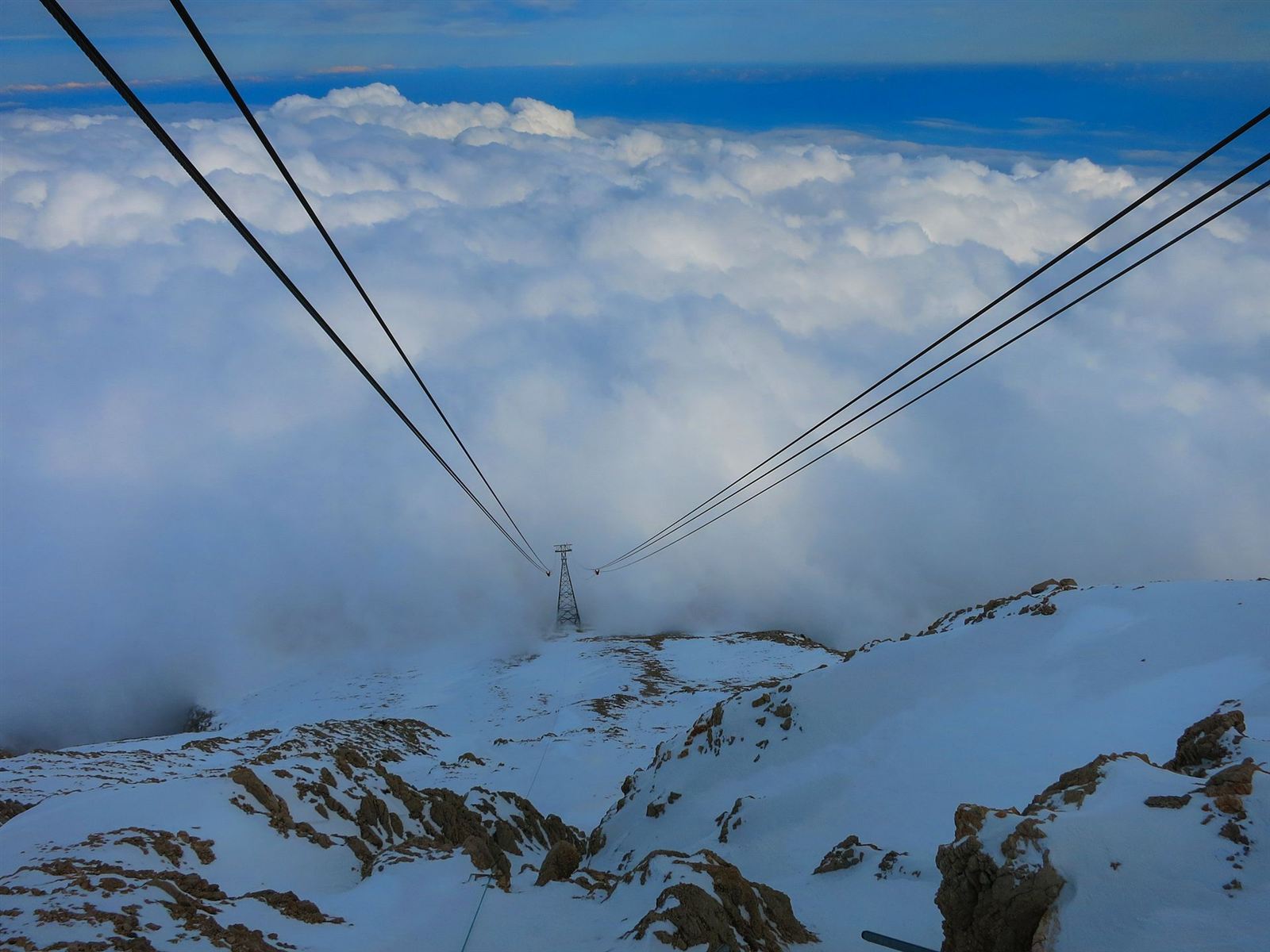
South of Kemer, rising out of the pine forest between Çamyuva and Tekirova, a big red cabin takes you on one of the most striking cable car journeys in Türkiye. Olympos Teleferik has been climbing to the 2,365-metre summit of Tahtalı Mountain since 2007, which makes it the country’s highest-climbing passenger cable car. It stands alone in type as well: instead of small circulating gondolas, this is a classic aerial tramway with two large cabins working in opposition; each cabin carries eighty people and covers the line of more than 4.3 kilometres in a little under ten minutes.
The ride itself is a piece of theatre. As you leave the bottom station the pine and cedar forest slides away beneath your feet, then the coastline opens out in its full width; on clear days the blue of the Mediterranean runs to the horizon, and on cloudy ones the cabin at some point climbs above a sea of cloud and the world below disappears. At the top you are met by a viewing terrace, a restaurant and that famous panorama where the Taurus mountains meet the sea. Tahtalı is also one of the favourite launch points for paragliding; plenty of people go up by cable car and come down under a wing.
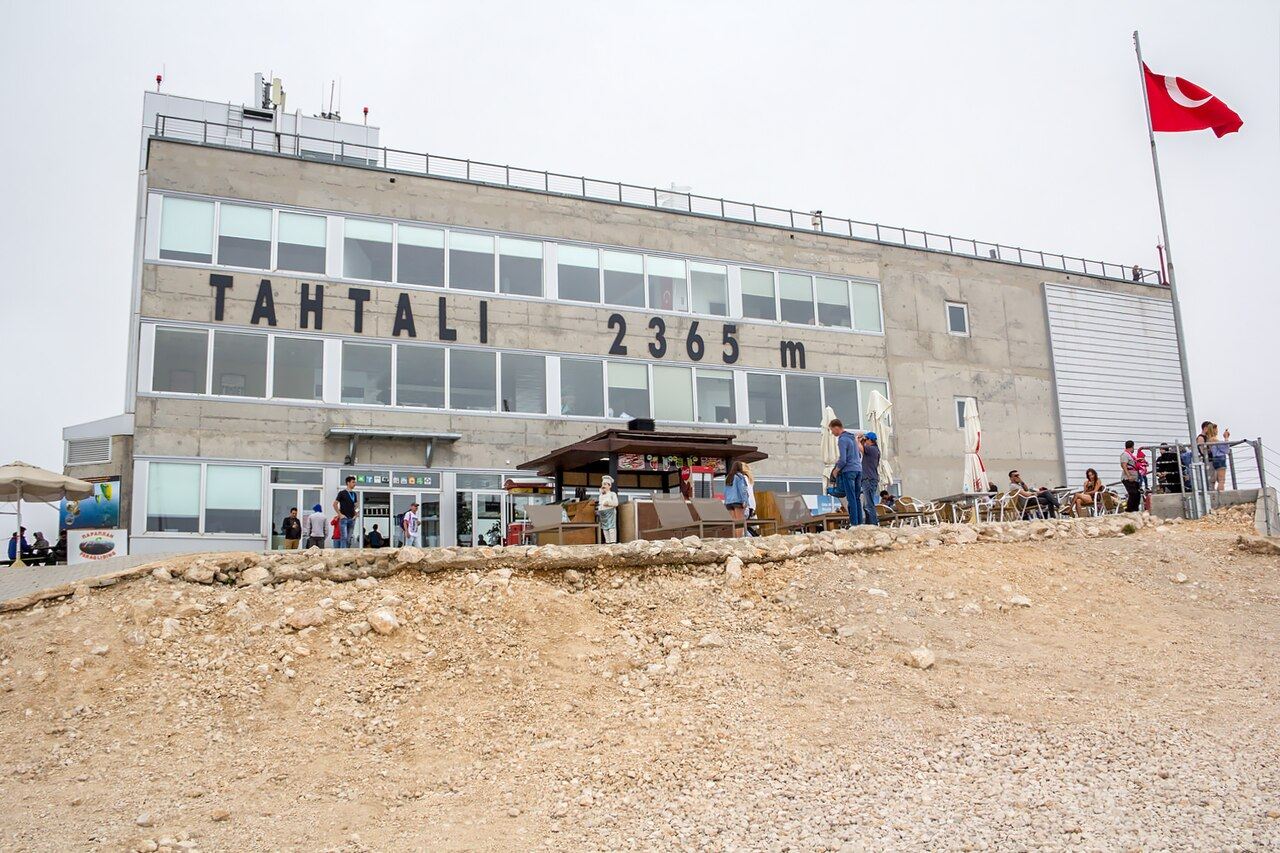
The installation runs all year round, with sunset departures laid on during summer evenings. A note on the name: “Olympos” comes from Tahtalı’s name in antiquity. The ancient city and beach of Olympos on the Kumluca side are separate places; the cable car does not start from there, and locally the line is also known as “Tahtalı Teleferik”.
Antalya — the silence of Tünektepe, the two seasons of Saklıkent
Follow the coast from Kemer towards the centre of Antalya and you will see a hill pushing out into the sea at the western end of Konyaaltı: Tünektepe. People in Antalya have known this hill for generations; the revolving restaurant built on its summit in the early 1980s, whose floor turned to reveal the bay little by little, was one of the city’s favourite venues for years. When the gondola line from Sarısu to the summit opened in 2017, the winding hill road turned into a nine-minute panoramic ride, with the cliffs, Konyaaltı beach and the bay all left beneath your feet.
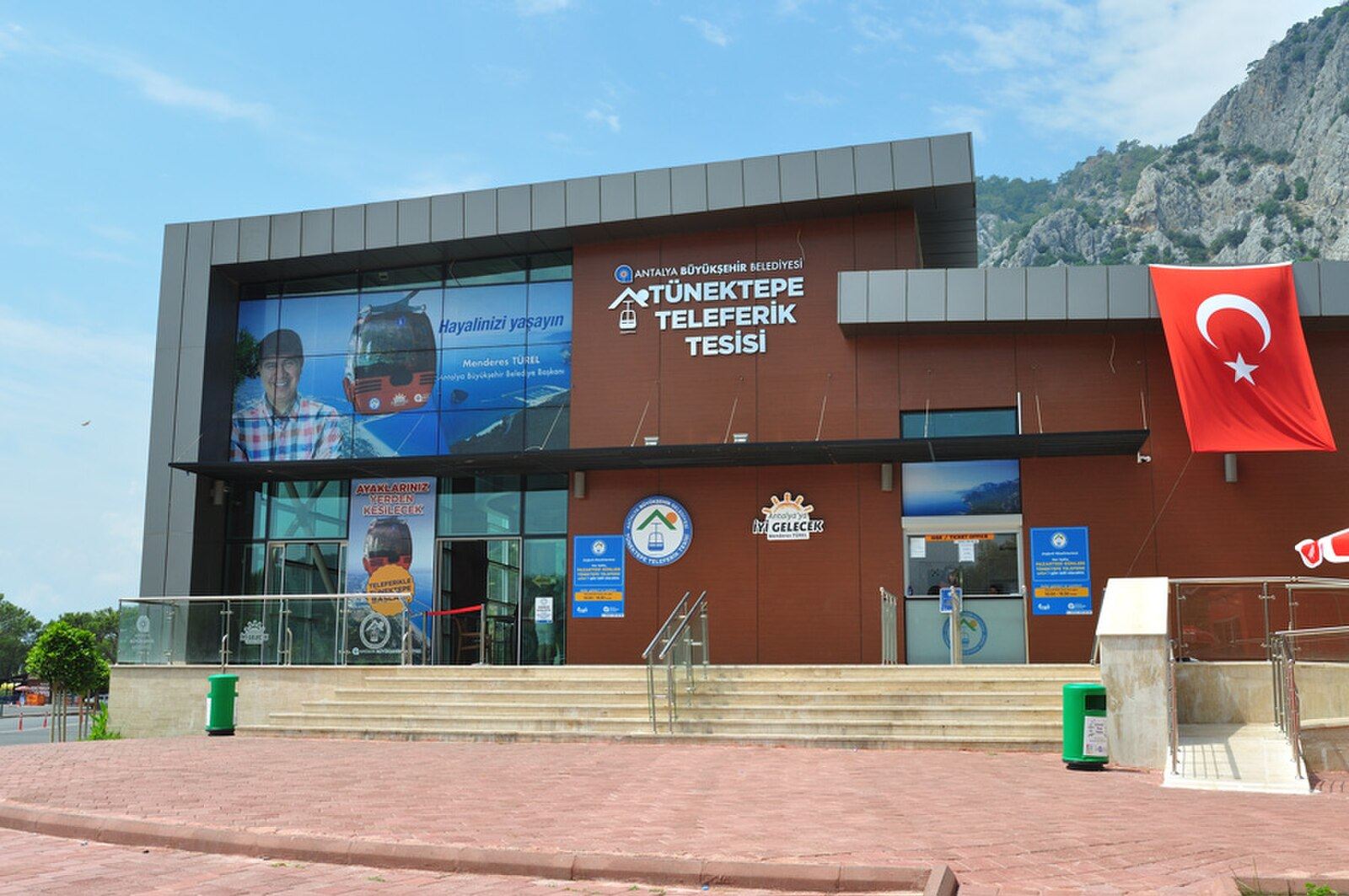
The accident of 12 April 2024, in which one person lost their life, changed the fate of the line; the installation has been closed ever since. In the spring of 2026 Antalya Metropolitan Municipality decided to remove the ropes and redevelop the site. The hill is still there and the view is unchanged; but going up Tünektepe by cable car is, for now, a memory belonging to Antalya’s recent past.
In the mountains to the north-west of the city, though, a quite different story is tucked away. On the northern flank of Bakırlıdağ in the Beydağları range, Saklıkent was founded in 1971 under the leadership of the provincial governor of the day and is one of the oldest ski areas in Türkiye. The resort’s best-known promise is “two seasons in one day”: skiing on pistes above 2,000 metres in the morning, the sea at Konyaaltı in the afternoon. The Karakaya chairlift, at some fourteen hundred metres, and the Saklıbel surface lift serve the pistes above a yayla settlement of around five hundred mountain chalets. Just above, on Bakırlıtepe, the domes of the TÜBİTAK National Observatory gleam — the same mountain road carries skiers in winter and astronomers all year, and the clear skies of the region are the reason for both. Let us also clear up a confusion: the Saklıkent here is not the same place as the famous Saklıkent Gorge near Fethiye.
Alanya — over the beach to the castle
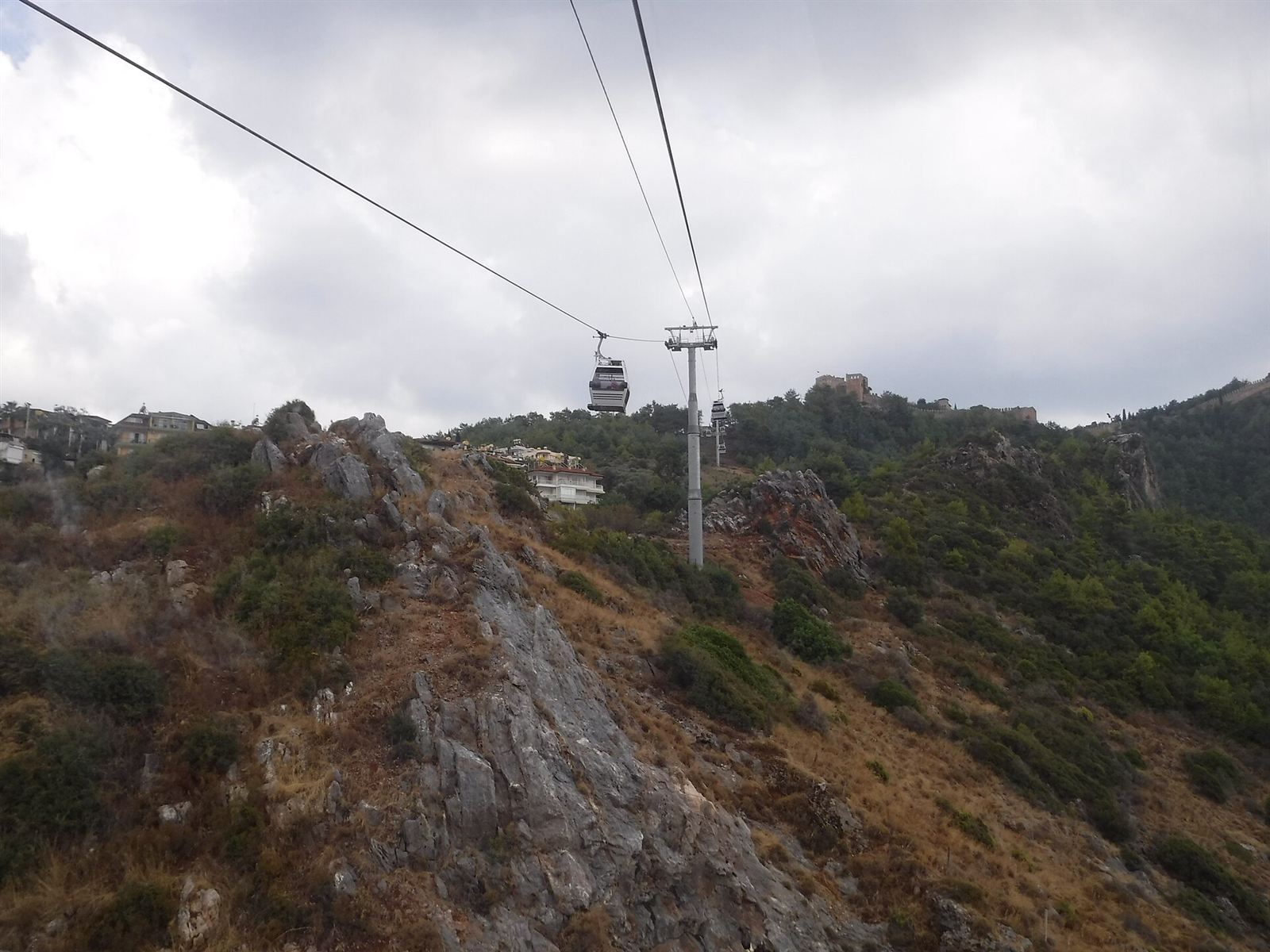
Follow the coast eastwards to Alanya and you will see just how closely a cable car can weave itself into a city. Alanya Teleferik, which entered service on 19 August 2017, climbs from the bottom station at Damlataş up to the Ehmedek quarter of Alanya Castle; the short but steep 900-metre line passes directly over the turquoise water of Cleopatra Beach and the Damlataş cliffs. Step into one of the seventeen cabins and you have the crowds of the beach on one side and the silhouette of the Seljuk walls climbing the ridge on the other; within a few minutes it feels as though you have travelled between centuries.
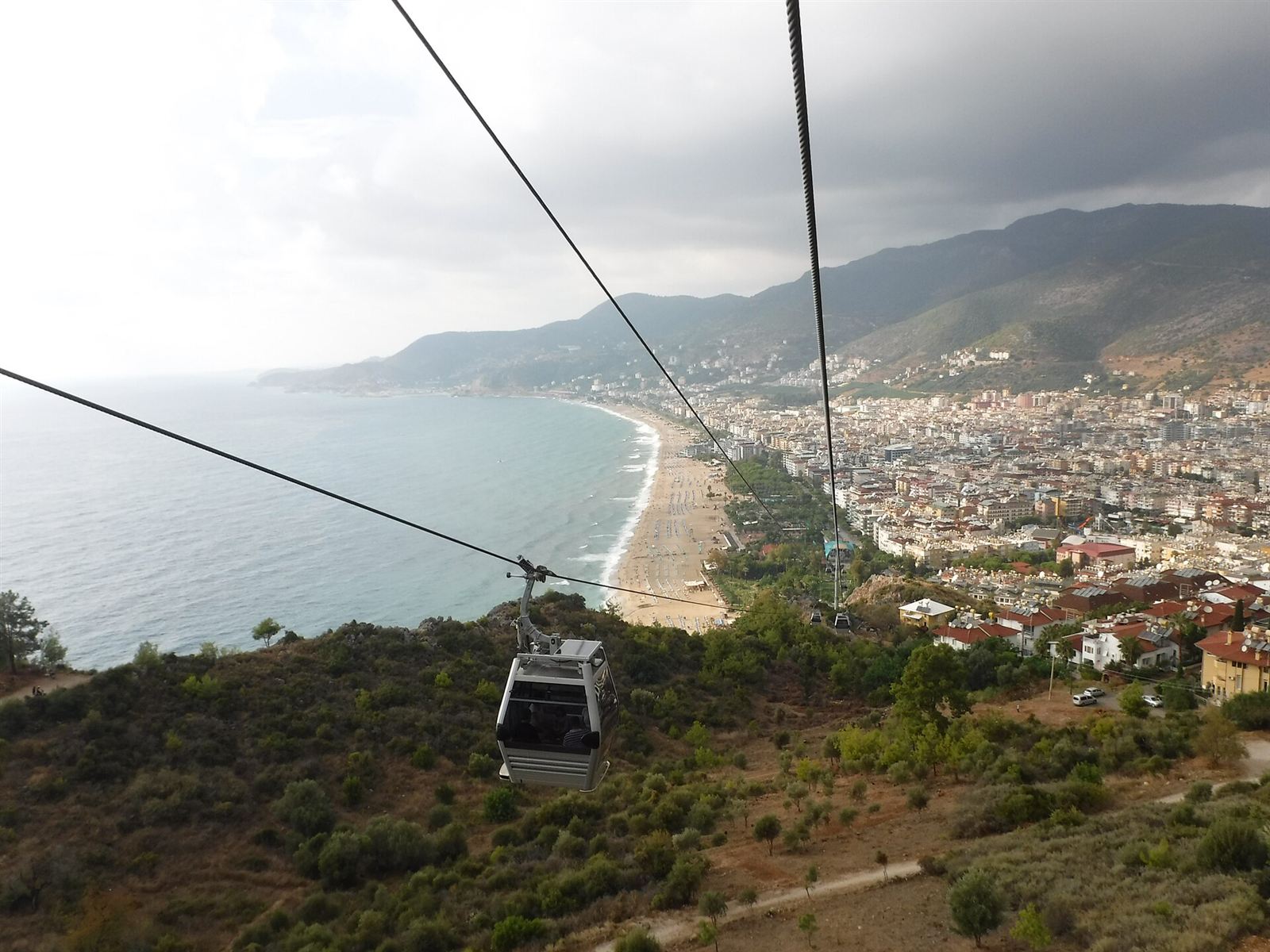
The reason the line exists at all is the castle itself: before the cable car, reaching Alanya Castle — a first-degree archaeological site — meant either a steep climb or vehicle traffic on narrow lanes. From the top station, the İçkale and Ehmedek are within walking distance; most visitors ride up and then walk back down through the walled town. On summer evenings the line runs late, and drifting back down over the lights of Alanya has become one of the city’s best-loved rituals.
Isparta — Davraz: the piste of the lake district
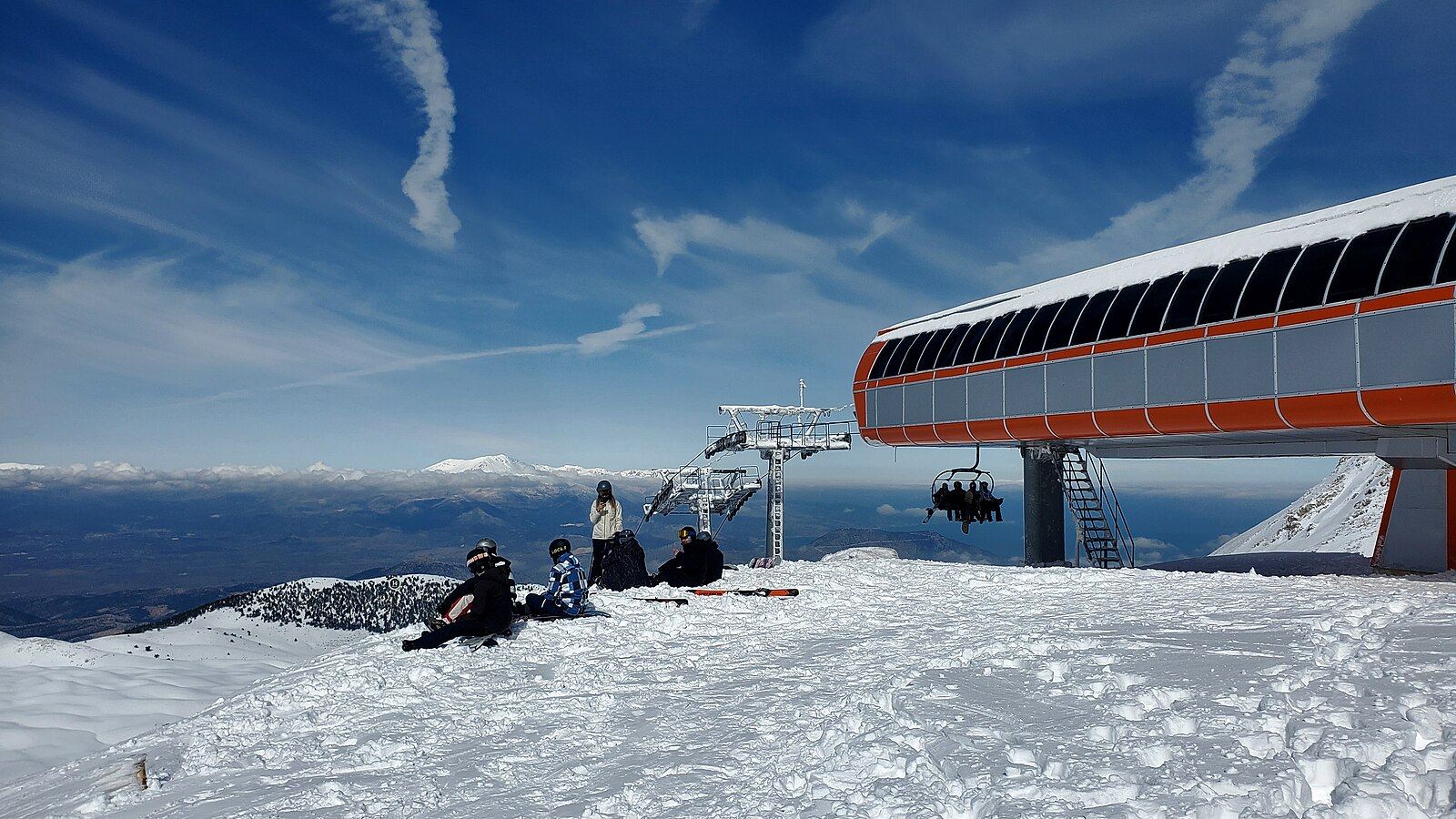
Turn west from Alanya and climb to the northern side of the Taurus and you arrive in the Lake District. Davraz Mountain, just south-east of Isparta, is the region’s skiing address. Run by the Provincial Special Administration, the resort is laid out between 1,650 and 2,394 metres; new lifts were added over the years on top of the first chairlift built in 2000, and a four-seat detachable line arrived in 2011. Today four chairlifts and one surface lift serve a piste network of nineteen kilometres. Davraz’s appeal is not only in the snow: looking out from the north-facing slopes that the pistes follow, you see the Isparta plain, and on clear days the glint of the lakes comes with it; its proximity to both Antalya and Isparta makes the resort an easy option for the weekend skier.
Burdur — Salda’s white shore
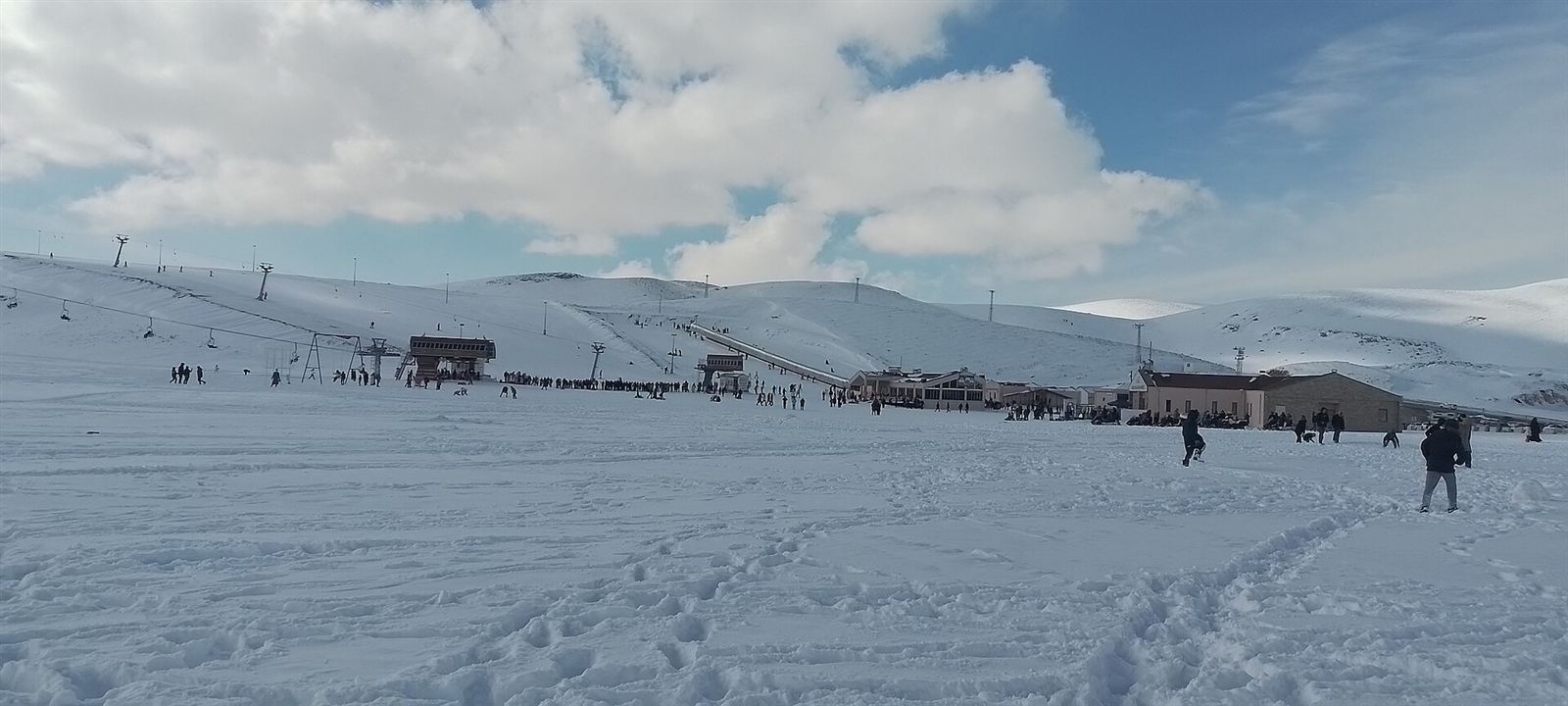
Cross west from Davraz into Burdur and you find a small ski area in the shadow of one of the most famous lakes in Türkiye. Salda Ski Resort, at Yeşilova, is laid out on the Tınaztepe section of the Eşeler mountain chain, seventeen kilometres from Lake Salda with its celebrated turquoise water. Two-person T-bar surface lifts carry skiers up the slope on an 860-metre line; alongside pistes varying between five hundred and one thousand six hundred metres, the resort’s real distinguishing feature is its broad terrain, suited to cross-country and biathlon courses. Salda, the only ski resort in Burdur, is an easy stop for the day-tripper thanks to its position close to the Antalya–Denizli highway: for anyone who has seen the lake’s white sand in summer, seeing the same landscape under snow is reason enough on its own.
Kahramanmaraş — Yedikuyular: the resort named after its wells
At the eastern end of the Mediterranean region, on Ahır Mountain rising above Kahramanmaraş, stands one of the youngest ski resorts in the area. Yedikuyular, opened in January 2018, takes its name from seven old water wells on the slope — some of which are still there today. Running from 1,833 metres to 2,044 metres with a chairlift, a surface lift and a magic carpet, the resort was presented on opening as the only winter sports facility for a wide surrounding area; it was intended to be the gateway through which the south-east and the eastern Mediterranean would meet skiing.
The recent history of the resort is bound up with the recent history of the city. After the earthquakes of 6 February 2023, the installation could not open for two seasons; the reopening in January 2025 was welcomed as a symbolic return to normality for the city, and operation passed to the Metropolitan Municipality. Today the chairlift carries skiers in winter and sightseers in the snow-free months; from the top, the Kahramanmaraş plain is visible in its full breadth.
The Aegean: two Bozdağs, a yayla and a lagoon
Turn from the Mediterranean to the Aegean and the character of the lines changes. Here a cable car has either etched itself into a city’s memory or climbs to an ancient hilltop, a highland pasture or a paragliding launch site. The Aegean’s installations are small but their stories are large.
Izmir — Balçova: the cable car that named its neighbourhood
If you want to read the spread of the urban cable car idea in Türkiye off a single line, look at Balçova. In the summer of 1970 Ercüment Uysal, Balçova’s first mayor, was so struck by a cable car he rode in the Romanian city of Braşov that he set to work on his return; he had the Bursa line — then the only example in Türkiye — studied, and a contract was signed in 1972. When the line opened on 24 March 1974 it became the country’s second urban cable car, eleven years after Bursa. The neighbourhood where the bottom station stands is today officially named “Teleferik Mahallesi” — here, the cable car gave the district its name.
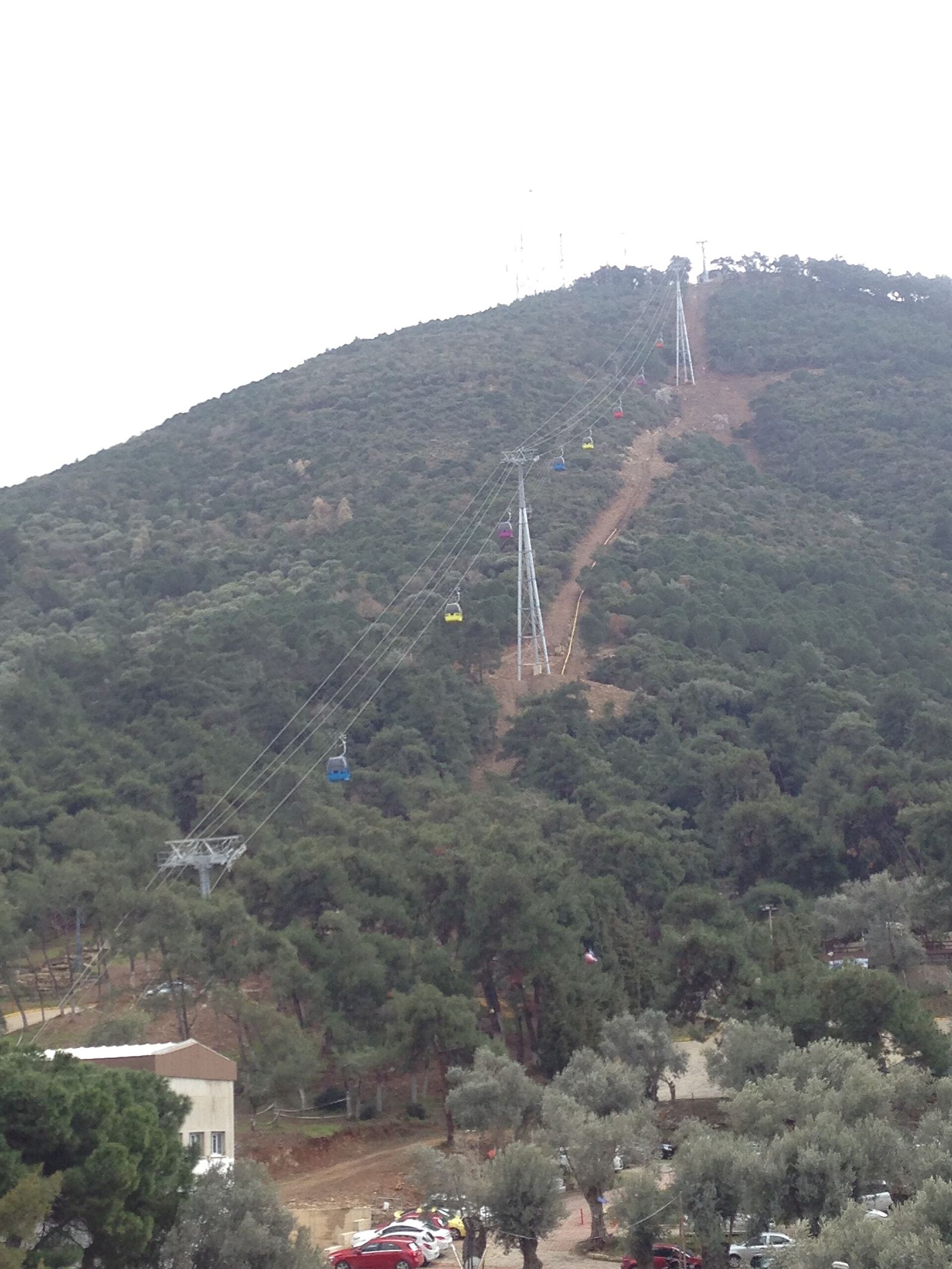
The 810-metre line climbs to Dededağı on the ridge behind the city, to a picnic and recreation area looking out over the Gulf of Izmir; twenty cabins of eight people each cross the slope in three minutes. The line’s more-than-half-a-century of life also documents the maintenance culture of a living urban cable car: stopped in 2008 on the strength of a safety report, the installation was renewed from top to bottom and reopened in the summer of 2015, and in the summer of 2026 it went through another comprehensive overhaul. These pauses are a sign not of the line’s age but of how seriously it is taken; the half-century-old cable car still carries the people of Izmir up to their view of the gulf.
Bergama — four minutes to the Acropolis
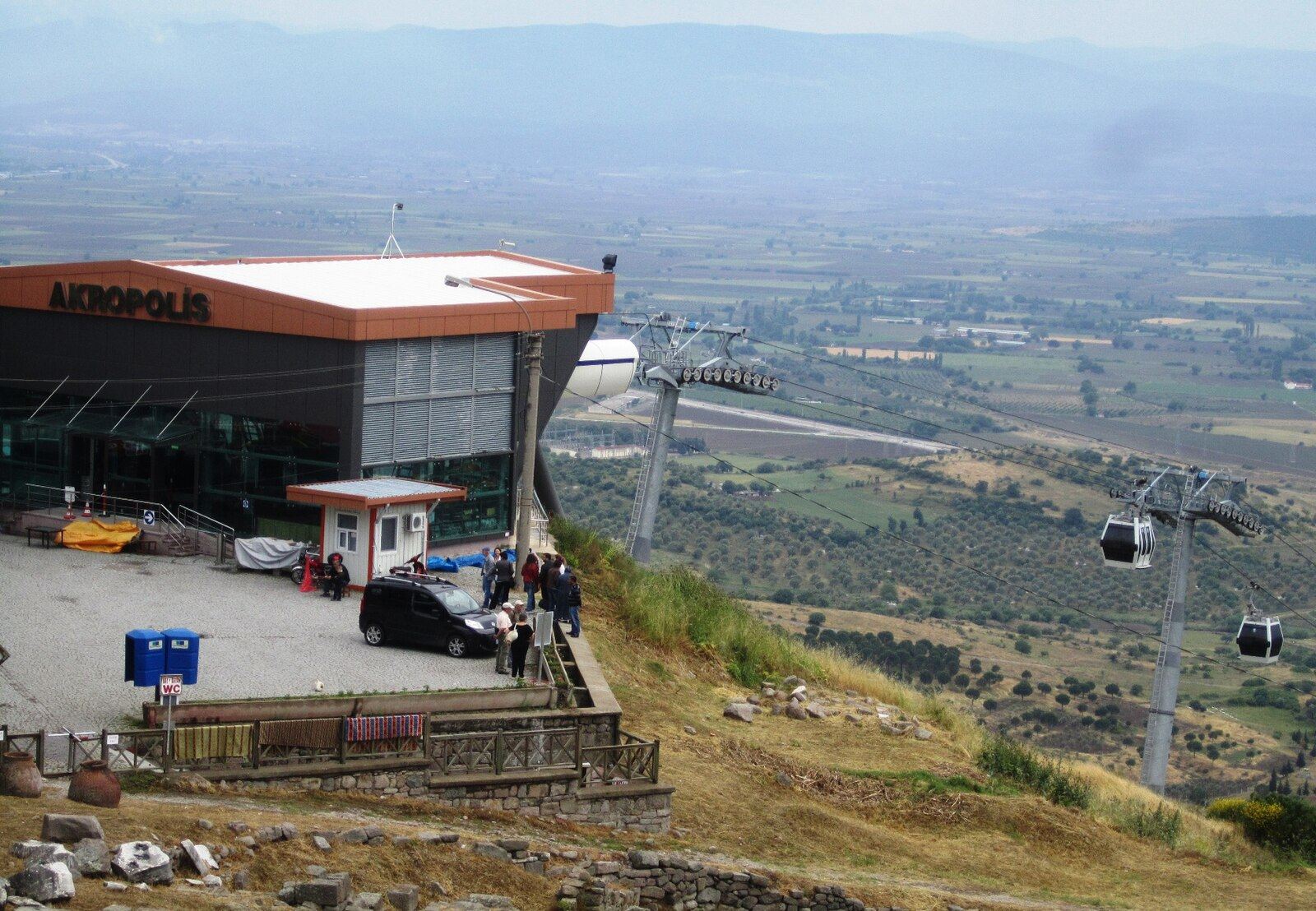
At Bergama, north of Izmir, the cable car is in the service of a world heritage site. Akropolis Teleferik, opened in 2010, climbs from the town centre to the top of the Pergamon Acropolis: a 700-metre line with eight-person cabins crosses in four minutes the steep slope that once demanded a great deal of sweat. Look back from the cabin and the Bakırçay plain and the red-tiled fabric of Bergama spread out below; above, the columns of the Temple of Trajan and one of the steepest ancient theatres in the world await you. Visiting habits have shaped themselves around the line: most travellers ride up and walk down the ancient road. It is one of the few lines in Türkiye built to give direct access to a UNESCO World Heritage Site.
Ödemiş — Bozdağ: the resort that came back from an avalanche
East of Izmir, rising above the Küçük Menderes plain, Bozdağ is Izmir’s only skiing mountain. Established in 1997 by the Provincial Special Administration, the resort carried the day-trip skiers of Izmir, Aydın and Manisa for years with a chairlift running from 1,528 metres to 2,154 metres and two surface lifts; the local press likes to call it “the white paradise of the Aegean”. Then the mountain reminded everyone of its own rules: when an avalanche damaged the installations in 2013, the resort was closed on safety grounds and fell silent for many years.
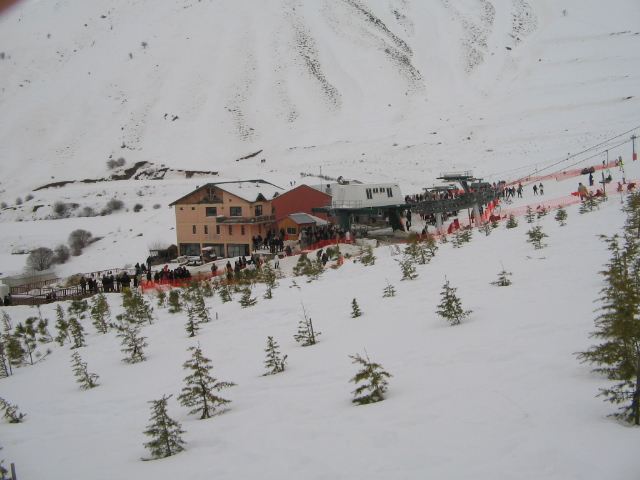
The return came through an engineering effort of a kind rarely seen in Türkiye. The installations were transferred to the Ministry of Agriculture and Forestry and an avalanche-protection scheme lasting some three years was built into the slopes: snow bridges, wind fences, deflecting walls and an avalanche deposition zone. The resort began welcoming skiers again on 19 January 2024; even if only as a seasonal, day-trip operation on a mountain with little snow security, the sound of lifts has returned to Bozdağ. One warning: there are two separate Bozdağs in Türkiye where people ski — this is the one at Ödemiş in Izmir; we shall meet its namesake in Denizli shortly.
Aydın — the long wait at Aytepe
The bittersweet stop on the Aegean journey is Aydın. In 2009 a 563-metre gondola line was built from the Pınarbaşı recreation area south of the city centre up to the Aytepe viewpoint overlooking the Büyük Menderes plain. Its operating history, however, is full of interruptions: it stopped shortly after opening, was tried again several times, and has not carried passengers since the middle of the 2010s. Aydın’s only cable car hangs on the hillside today like a question mark; although local traders’ calls for it to reopen surface from time to time, the cabins have not moved.
Denizli — a line to the yayla, and the snow of Nikfer
Denizli holds two separate faces of rope transport within the same province. The first is Denizli Teleferik, opened in October 2015: the 1,500-metre line from the bottom station at 300 metres altitude in the Pamukkale district up to 1,400 metres on the Bağbaşı yayla is, with the roughly eleven hundred metres of rise it gains over a short distance, one of the steepest-profile lines in Türkiye. Step into one of the twenty-four cabins and seven minutes later a citizen of Denizli finds themselves out of the city’s heat and in the cool of the highland pasture — which was precisely the promise of the line: “the yayla in ten minutes.”
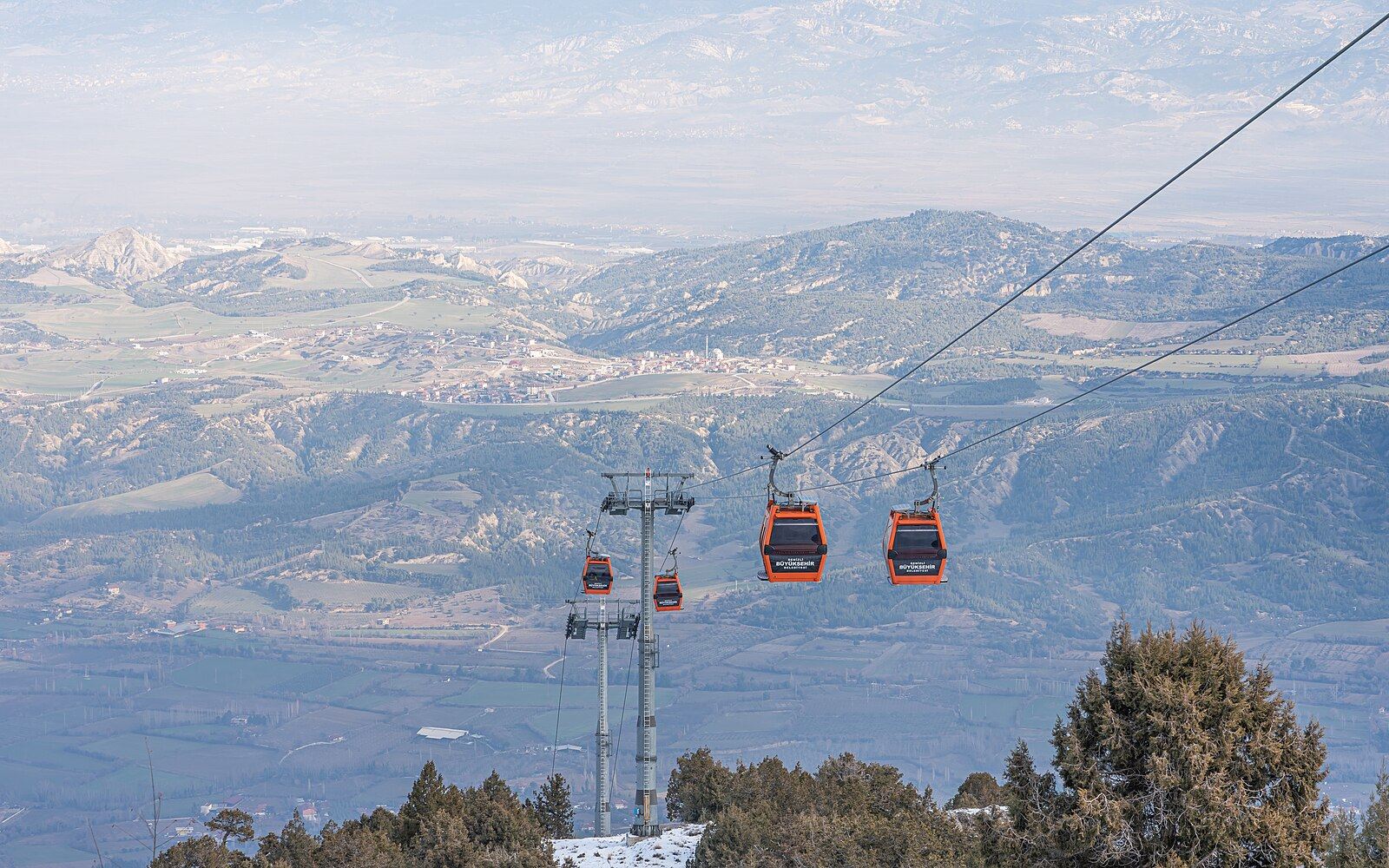
The line’s recent past is a living lesson in how decisive maintenance is for a cable car operation: after broken wires were detected in the track rope in the summer of 2024 the line was stopped, the rope was completely replaced, and the installation was reunited with its passengers in January 2026. Maintenance pauses of this kind come with the territory; today the cabins still carry the people of Denizli from the city’s heat to the cool of the yayla.
The province’s second face is Denizli Ski Resort, laid out on the 2,421-metre Bozdağ on the Nikfer side of the Tavas district — yes, this is the Aegean’s second Bozdağ, and to avoid confusion it is referred to by the provincial name in official communications. Run by the Metropolitan Municipality, the resort works with two chairlifts, a surface lift and a magic carpet; with pistes reaching one thousand seven hundred metres, it is Denizli’s push into winter tourism. In some seasons the opening of the yayla cable car and of the ski resort are announced together: the municipality’s “yayla and snow” pairing stands side by side on the same poster.
Muğla — the wings of Babadağ, the silence of Erendağ
At the southern end of the Aegean, rising above Ölüdeniz at Fethiye, Babadağ is one of the most famous paragliding mountains in the world — and it is home to one of the most unusual cable cars in Türkiye. The line, opened in June 2021, starts on the Ovacık side of Ölüdeniz and reaches, in stages, stations at 1,200 and 1,700 metres; access to the higher launch sites is provided by chairlift. This gondola-plus-chairlift arrangement is unique in Türkiye and its reason for being is plain: before the cable car, pilots and tandem passengers went up to the summit on a dusty mountain track in pick-ups and minibuses, a journey of close to an hour. The line cut that ordeal down to minutes and visibly increased the colourful wing traffic above Ölüdeniz.
The ride is a reward in itself even for those who will not be taking to a parachute: as the cabin climbs, the Ölüdeniz lagoon, Belcekız beach and the Gulf of Fethiye are left beneath your feet. The force behind the project is worth telling too: the line was built and is run not by a municipality but by a local joint-venture company set up under the leadership of the Fethiye Chamber of Commerce and Industry.
Inland from the same district, in the town of Seki in Seydikemer, stands the other side of the coin. Beside the Fethiye–Antalya highway, on the flank of the 2,863-metre Eren Mountain, Erendağ Ski Resort was completed in 2009 and opened under headlines announcing “a ski resort for Muğla, the paradise of sea and sun”; the promise of swimming and skiing on the same day made the front pages. The installation lasted only a few seasons: the business model collapsed, the chairlift stopped and the resort was left idle on the mountain. As one of the shortest-lived ski investments in Türkiye, it stands like a monument to the fact that building is not enough — running the thing is a separate skill.
Kütahya — Murat Dağı: from hot spring to piste
Travel into the inland uplands of the Aegean, to the Gediz district of Kütahya, and you meet one of the most curious pairings in Türkiye: a thermal spa and a ski piste at the same facility. At Murat Dağı Thermal and Ski Resort, water flows from springs at 1,450 metres at a temperature of 41 degrees; a few hundred metres higher, on the slope above the Sarıçiçek yayla, a T-bar surface lift of about 750 metres carries skiers to a point above 2,000 metres. The resort opened in 2012 with a small beginners’ lift, and the T-bar was added in 2020; it is operated by Gediz Municipality. Ski in the morning, rest in the thermal pool at midday — the slogan “Türkiye’s first and only thermal ski resort” is not for nothing.
Marmara: from the Bosphorus to Uludağ
Marmara holds both the oldest and the newest pages of the history of rope transport in Türkiye at the same time: Istanbul’s hundred-and-fifty-year-old funicular running underground and Kocaeli’s giant gondola of 2024 are installations of the same region. And of course Bursa, where it all began, is here.
Istanbul — from Maçka to Piyer Loti
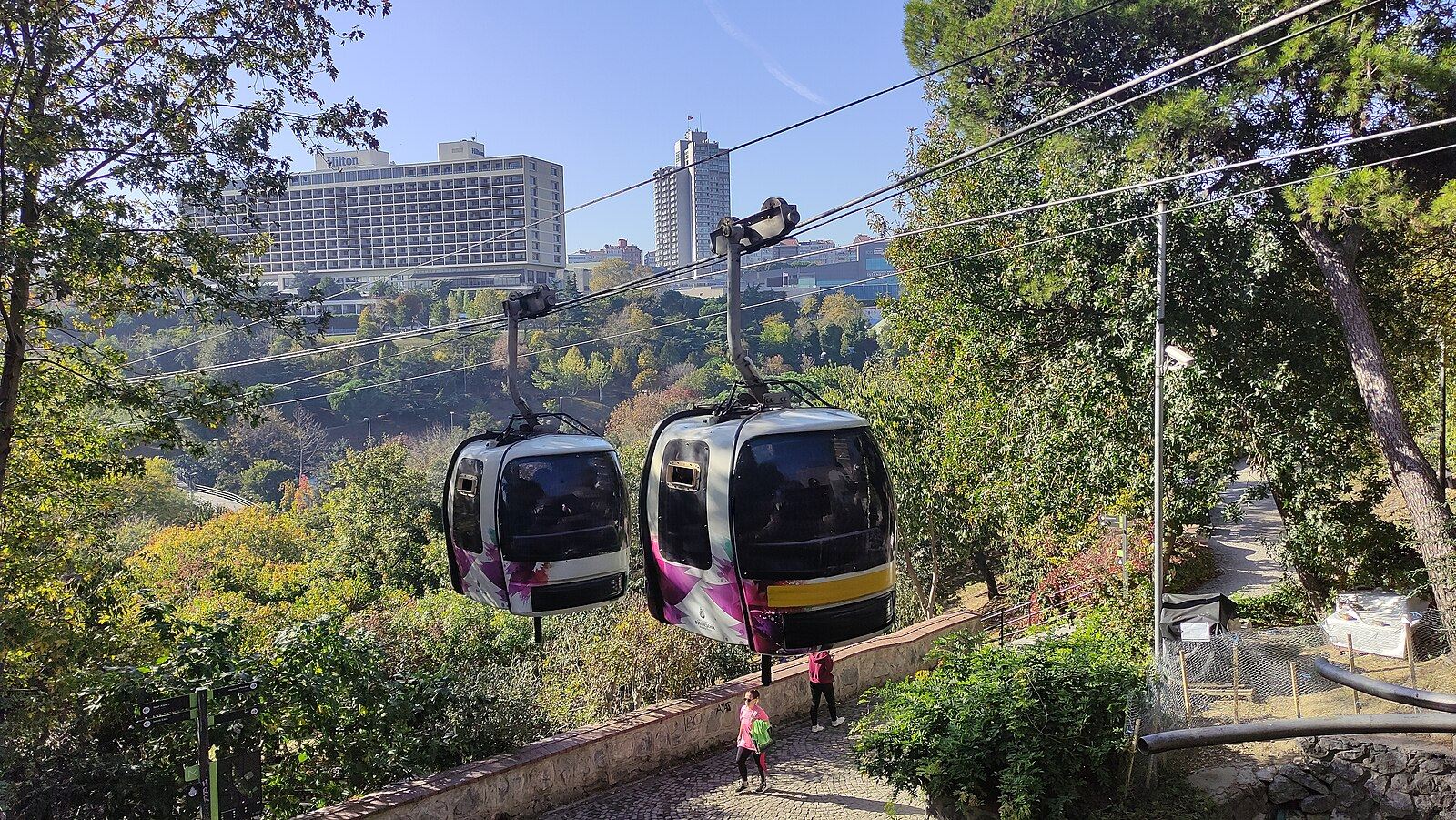
Both of Istanbul’s cable cars are short, and both are stitched firmly into the fabric of the city. The Maçka–Taşkışla line (TF1) has crossed the valley of Maçka Demokrasi Park in a single span, with no intermediate tower, since 1993: two small cabins in each direction cover the 347-metre line in three and a half minutes. Gliding over the trees of the park to land beside the İTÜ Taşkışla building, this modest line is operated by Metro İstanbul and is ridden on a standard public transport ticket. Let us take the opportunity for a warning: the “Maçka cable car” is in the Maçka quarter of Şişli in Istanbul; it has nothing whatever to do with the Maçka district of Trabzon — the two names are confused in search engines with surprising frequency.
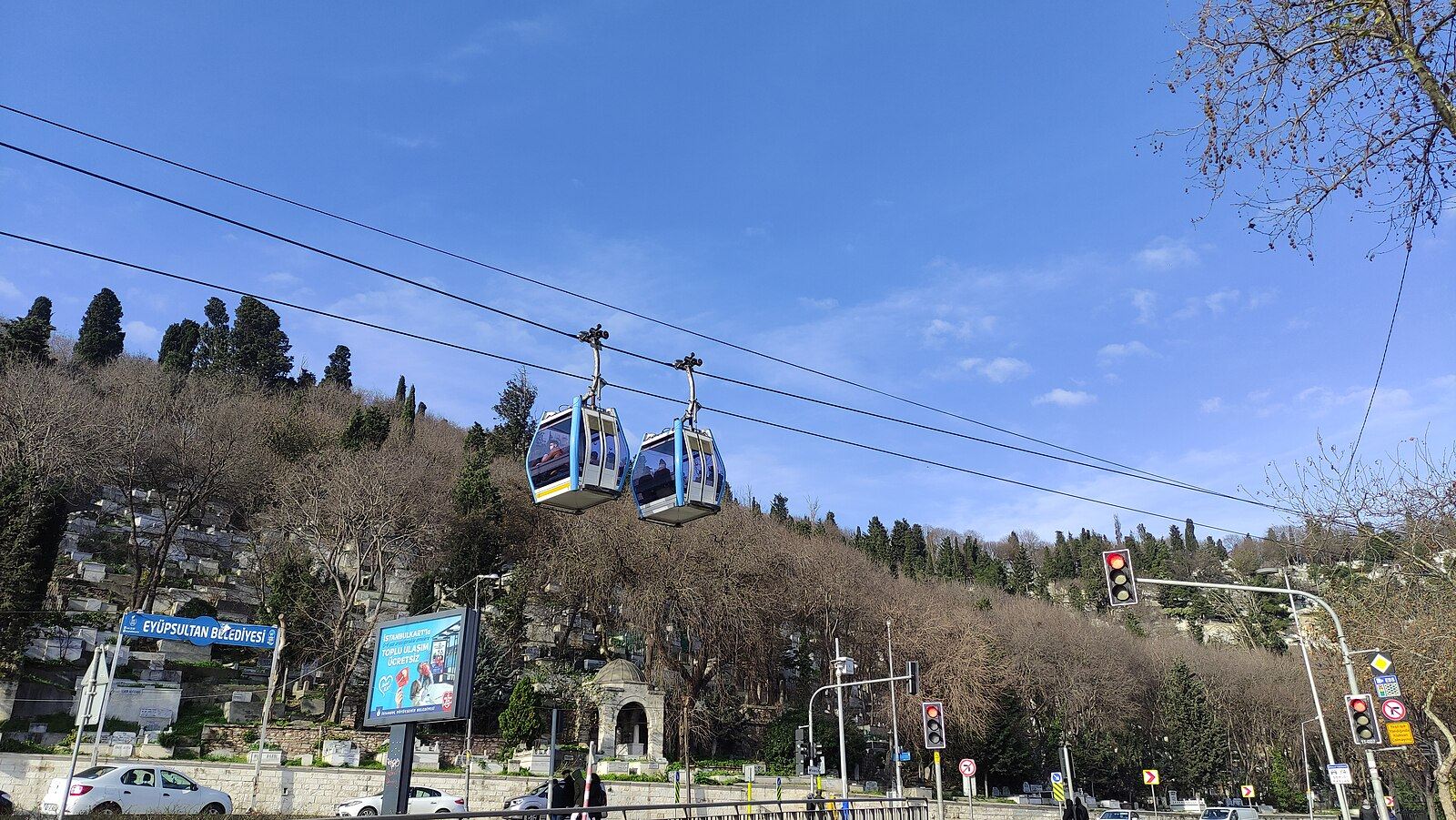
On the Golden Horn side, the Eyüp–Piyer Loti line (TF2) has offered one of the city’s best-loved short journeys since 2005. The eight-person cabins set off from the edge of Eyüpsultan’s historic quarter and, as they rise over the centuries-old cemetery on the ridge, the Golden Horn opens out in all its curves; the top station reaches the famous viewpoint named after Pierre Loti, the French novelist who liked to sit in a coffee house on the Eyüp heights. This is the only public transport way of getting up the steep slope without walking, and the line carries thousands of passengers a day.
Istanbul — the ropes beneath the ground
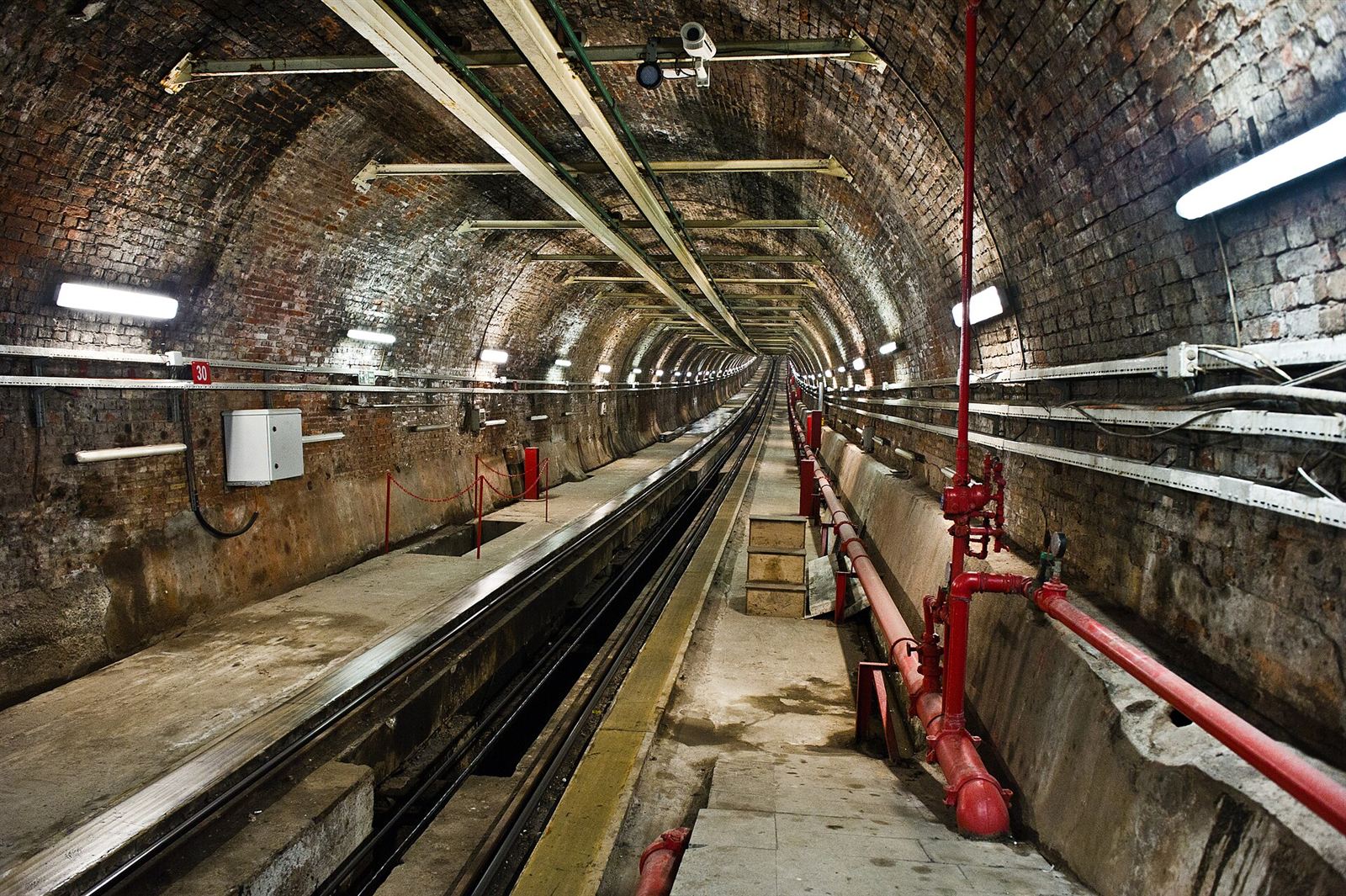
Türkiye’s adventure with rope transport in fact began not in the air but beneath Galata. When the French engineer Eugène-Henri Gavand saw the endless pedestrian traffic on the Yüksekkaldırım slope climbing from Karaköy to Beyoğlu, he looked for the answer underground; the Tünel, opened on 17 January 1875, became the world’s second-oldest underground railway after the London Underground. The 573-metre journey takes a minute and a half today, and the line, run by İETT, celebrated its hundred and fiftieth birthday with a ceremony on İstiklal Avenue in 2025. The carriages may run on wheels, but what pulls them up the slope is a rope — which is to say that, in the eyes of the regulations, the Tünel is the oldest member of the same family as the cable cars.
The Tünel’s modern grandchildren are scattered around the city too. The Taksim–Kabataş funicular (F1), opened in 2006, lifts passengers off the ferries and up 640 metres to the square, and most of them think they have boarded the metro. The Seyrantepe–Vadistanbul line (F3) of 2017 runs entirely above ground, on a viaduct; the fact that it is marketed as a “cable metro” is an entertaining example of how type names can be bent by advertising language — technically it too is a funicular. The newest, the Hisarüstü–Aşiyan line (F4) opened in 2022, drops from the ridges by Boğaziçi University down to the Bosphorus shore at Aşiyan; it takes the steep slope with the ease of a lift.
| Line | Opened | Route |
|---|---|---|
| Tünel (F2) | 1875 | Karaköy – Beyoğlu |
| F1 | 2006 | Taksim – Kabataş |
| F3 | 2017 | Seyrantepe – Vadistanbul |
| F4 | 2022 | Hisarüstü – Aşiyan |
Kocaeli — Kartepe: the gondola of a fifty-year dream
Come to the east of Marmara, into the basin of Lake Sapanca, and you meet two separate lines in two neighbouring provinces. The story on the Kocaeli side is the story of a long wait: the idea of a cable car to Kartepe had been on the city’s agenda since the 1970s and only became real on 25 March 2024. The 4,832-metre line climbing from the bottom station at Derbent up to Kuzuyayla, with its seventy-three ten-person cabins, is Kocaeli’s first cable car, and with its one thousand and ninety metres of vertical rise it is among the most ambitious new lines in Türkiye.
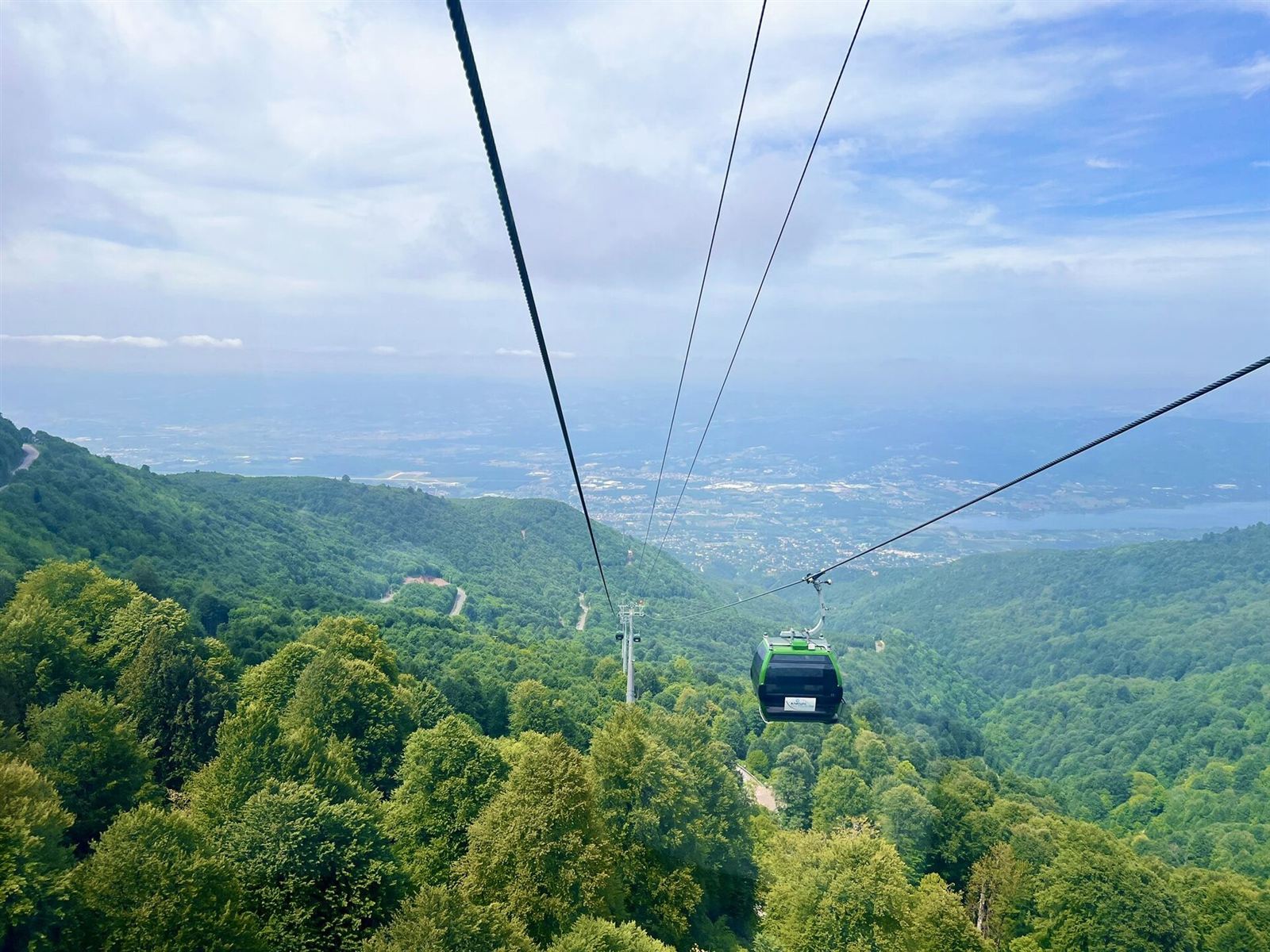
As the cabin rises over the forest of the Samanlı Mountains, Lake Sapanca spreads out in its full width beneath your feet; reporters like to describe the ride as going “not through the trees but over them”. The line has a practical purpose as well: on heavy snow days in winter, the mountain road up to the Kartepe ski resort is a hard climb, and the gondola takes the load off that road. Above, at Kuzuyayla, more than 1,300 metres up, the ski resort waits for you with its chairlifts and pistes; in its first year the line carried more than a hundred thousand passengers.
Sakarya — Sapanca: a terrace above the lake
On the Sakarya shore of the same lake, Sapanca Teleferik, setting off from Kırkpınar, entered service on 21 June 2023. Thirty-six eight-person cabins climb over the forest to the Mahmudiye ridge on a fifteen-hundred-metre line; as you rise, the whole of Lake Sapanca comes into view. The top station is a recreation complex in its own right: viewing terraces, a cafeteria, a zipline, a giant swing, ATV trails. The installation’s short history has not been without turbulence: in May 2024 the municipality sealed the site over shortcomings in its licence and contractual obligations; once these were put right the line reopened about a month later. That brief crisis is a current reminder that a cable car stands not only on its ropes, but on the ground of planning permission and licensing as well.
Bursa — Bursa Teleferik: the line where it all began
And then Bursa. The city where the cable car was born in Türkiye. Opened on 29 October 1963 — the fortieth anniversary of the Republic — after construction that began in 1958, the line climbed from Teferrüç to Uludağ: two cabins of twenty people each, working in opposition along a route of four and a half kilometres. That day the first cable car in Türkiye entered service, and the daily bond Bursa formed with its mountain was never broken again. For generations, the children of Bursa entered the clouds for the first time in those red cabins; “going up to Sarıalan by cable car for a barbecue” was written into the city’s shared memory.
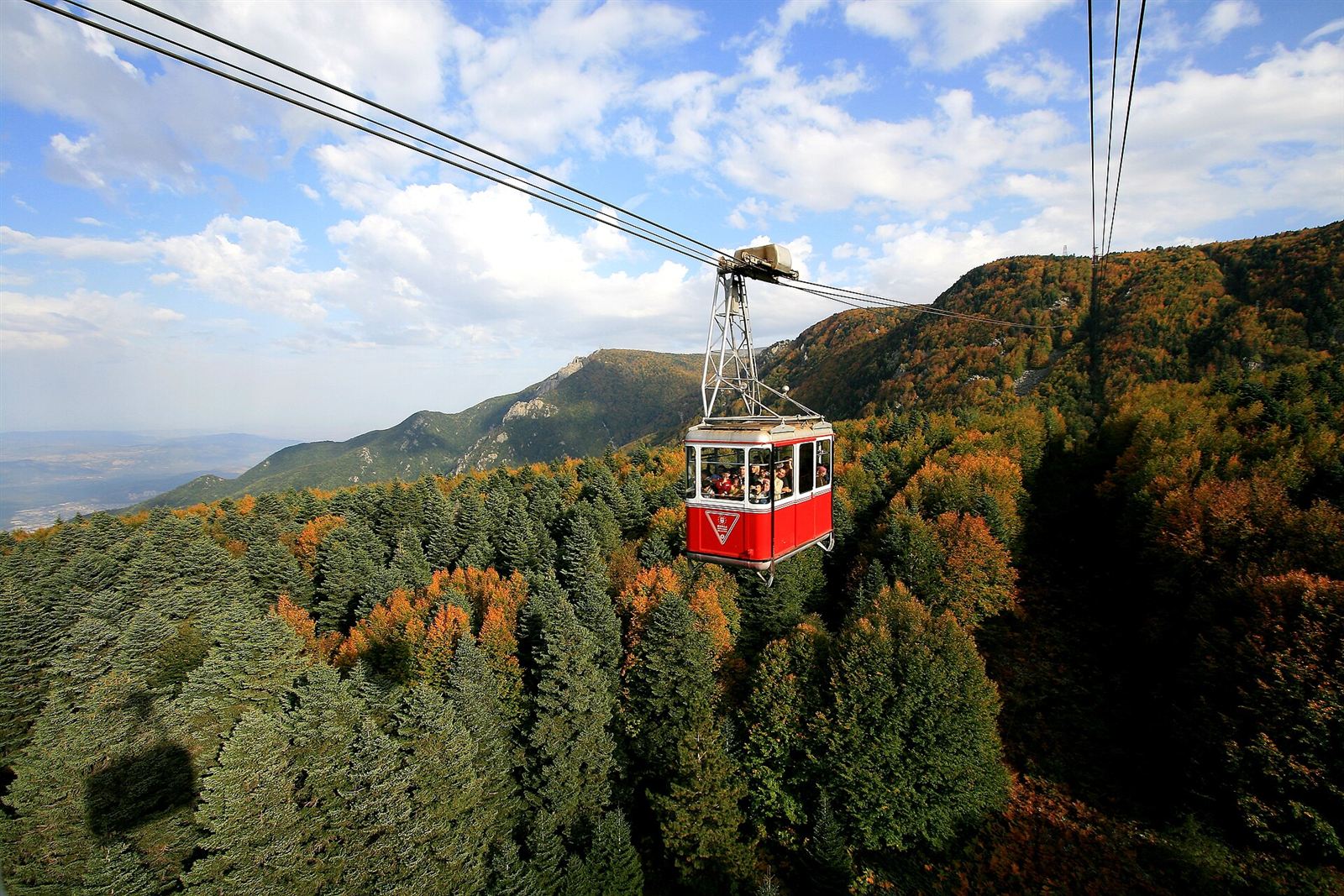
In 2014 the line was rebuilt from scratch and moved to an entirely different scale: the old aerial tramway was converted into a modern detachable-grip gondola line, the route was extended to the Hotels Zone and the total length rose to 8,800 metres. In this form Bursa Teleferik is the longest cable car in Türkiye, and when it opened it held the title of the world’s longest monocable gondola line. Today eight-person cabins carry one thousand five hundred people an hour along a four-station line from Teferrüç, via Kadıyayla and Sarıalan, up to the Hotels Zone at 1,800 metres.
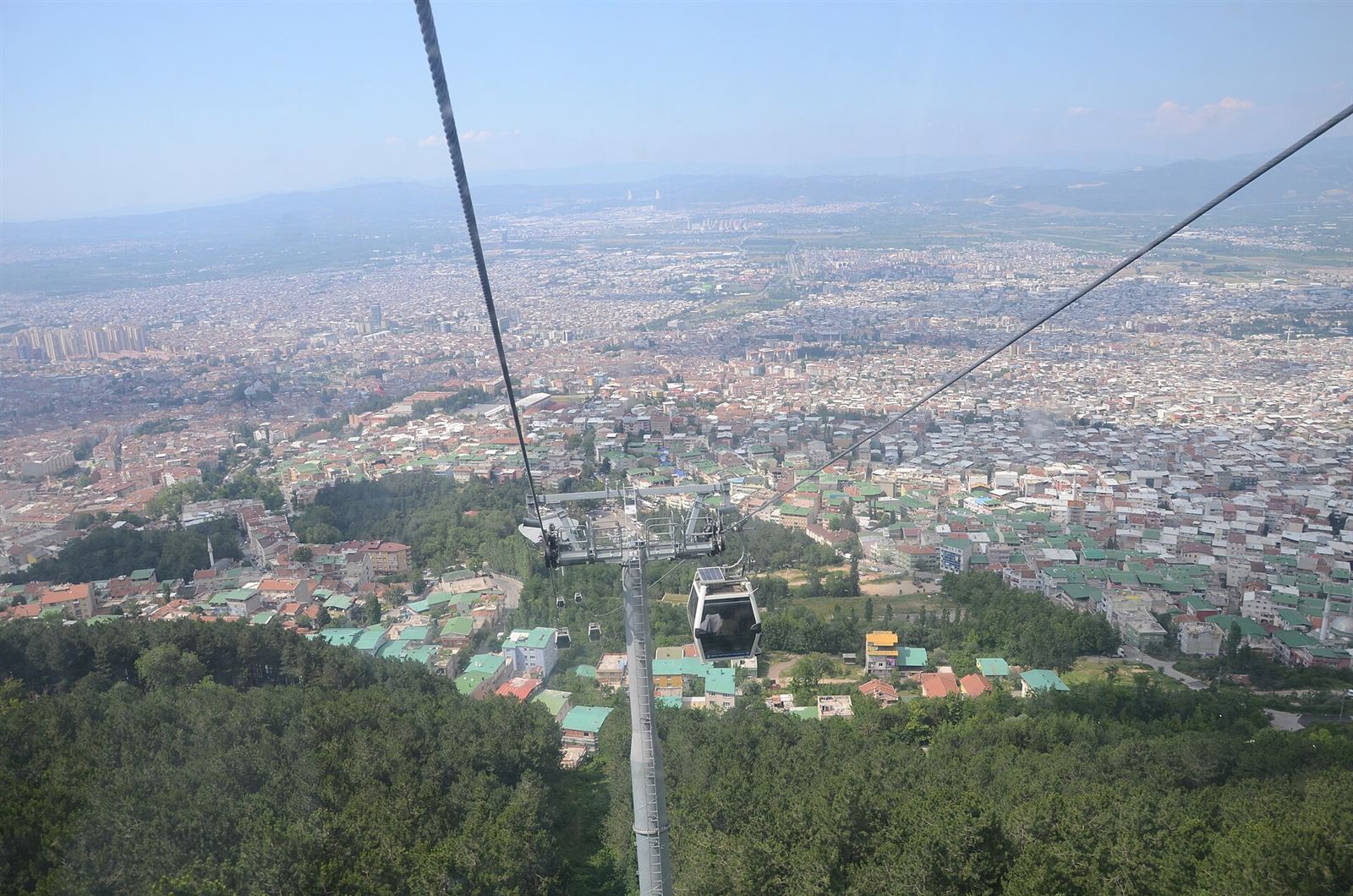
The journey begins above the Bursa plain; as the cabin climbs, the city shrinks away behind you and the forest of Uludağ National Park takes over. A breather at Kadıyayla, a pause on the camping and picnic flat at Sarıalan — and then the longest section of the line delivers you straight to the door of the ski resort. In winter the cabins fill with skiers and snowboarders, in summer with the people of Bursa in search of cool air. A correction of names belongs here too: the operating name of the line is “Bursa Teleferik”; there is no separate installation called “Uludağ Cable Car” — the two are simply the two names people use for the same line. We go into the technical story of the line in a separate article.
The lift mosaic of Uludağ
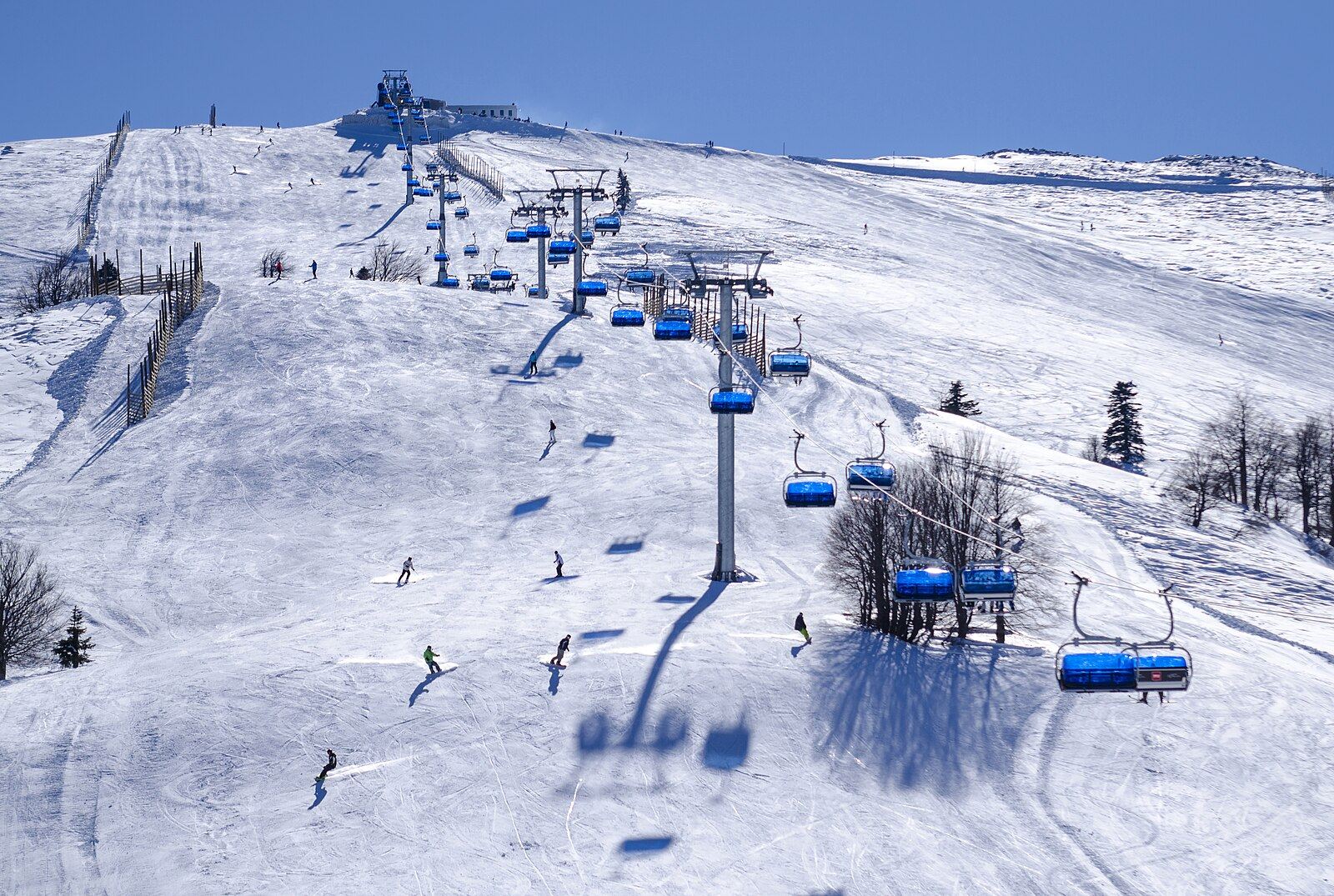
When the cable car sets you down in the Hotels Zone, you have landed in the middle of the busiest lift network in Türkiye. But this crowd on Uludağ is not a system built by one hand; it is a mosaic accumulated layer upon layer over decades. In Zone 1, where publicly and municipally funded installations are concentrated, the Fahri Chairlift of 1971 — one of the oldest chairlifts in Türkiye — is still exactly where it was; in Zone 2 the lifts that the hotels built for their own guests are lined up: the surface lifts, named after the businesses that own them, are mostly products of the 1980s and the early 2000s. Uludağ’s lead in the number of installations comes not from new investment but from this accumulation.
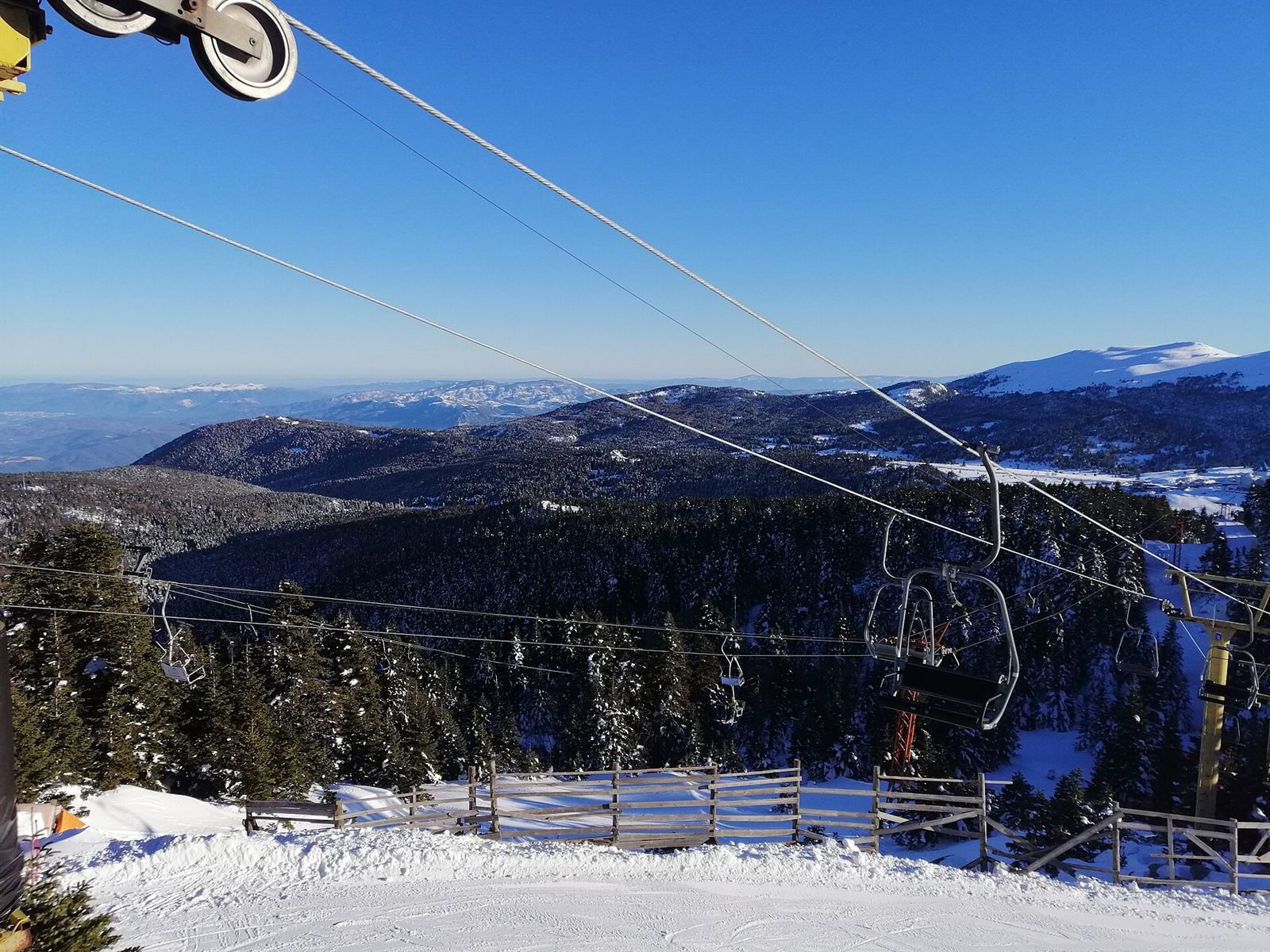
The ski area spreads between 1,781 and 2,322 metres across the foothills of Fatintepe and Kuşaklıkaya; twenty-eight kilometres of piste in total fill up every weekend with the advantage of being the largest ski area closest to Istanbul. In the 2020s the management of the area passed to the Uludağ Area Directorate under the Ministry of Culture and Tourism. For those who would like to see Uludağ’s lift mosaic in one place:
| Installation | Type | Zone | Year |
|---|---|---|---|
| Bursa Teleferik | gondola | Teferrüç–Hotels | 2014 (first 1963) |
| Ağaoğlu Cable Car | 6-person gondola | Zone 2 | 2006 |
| Tutyeli Chairlift | 4-seat detachable | Zone 1 | 2012 |
| Kuşaklıkaya Chairlift | 4-seat detachable | Zone 1 | 2006 |
| Maden Chairlift | 4-seat detachable | Zone 1 | 2005 |
| Cennetkaya Chairlift | 4-seat fixed grip | Zone 1 | 2006 |
| Kervansaray Chairlift | 2-seat fixed grip | Zone 1 | 1999 |
| Fahri Chairlift | 2-seat fixed grip | Zone 1 | 1971 |
| Beden Terbiyesi and TSK chairlifts | 2-seat fixed grip | Zone 1 | — |
| Karkay and Alkoçlar chairlifts | 2-seat fixed grip | Zone 2 | — |
| Cennetkaya Surface Lift | T-bar | Zone 1 | 2006 |
| Karinna, Monte Baia, Kartanesi, Kırkgözler and Mandra surface lifts | T-bar | Zone 2 | 2002–2003 |
| Yazıcı 1-2, İtalyan, Beceren 1-2 and Belvü surface lifts | T-bar | Zone 1 | 1986–1990 / — |
| Alkoçlar Surface Lift | T-bar | Zone 2 | — |
Central Anatolia: ropes across the steppe
Turn south-east from Marmara onto the steppe and the landscape grows simpler while the stories grow denser. Central Anatolia’s three stops show three separate states of the cable car in Türkiye: urban lines brought to a halt, a giant ski resort built to a plan, and a new hope in the middle of the steppe.
Ankara — the capital of stopped lines
Ankara’s cable car story is the kind that belongs less to engineering than to the law reports. The Yenimahalle–Şentepe line opened in 2014-2015 with a four-station route of 3.3 kilometres, as the first cable car in Türkiye built for public transport purposes: it connected Şentepe, a densely built residential district on the hillside, to the metro in the valley, cutting a winding half-hour bus journey down to thirteen minutes. For years the ten-person cabins ran eighteen hours a day, and free of charge for a long period at that.
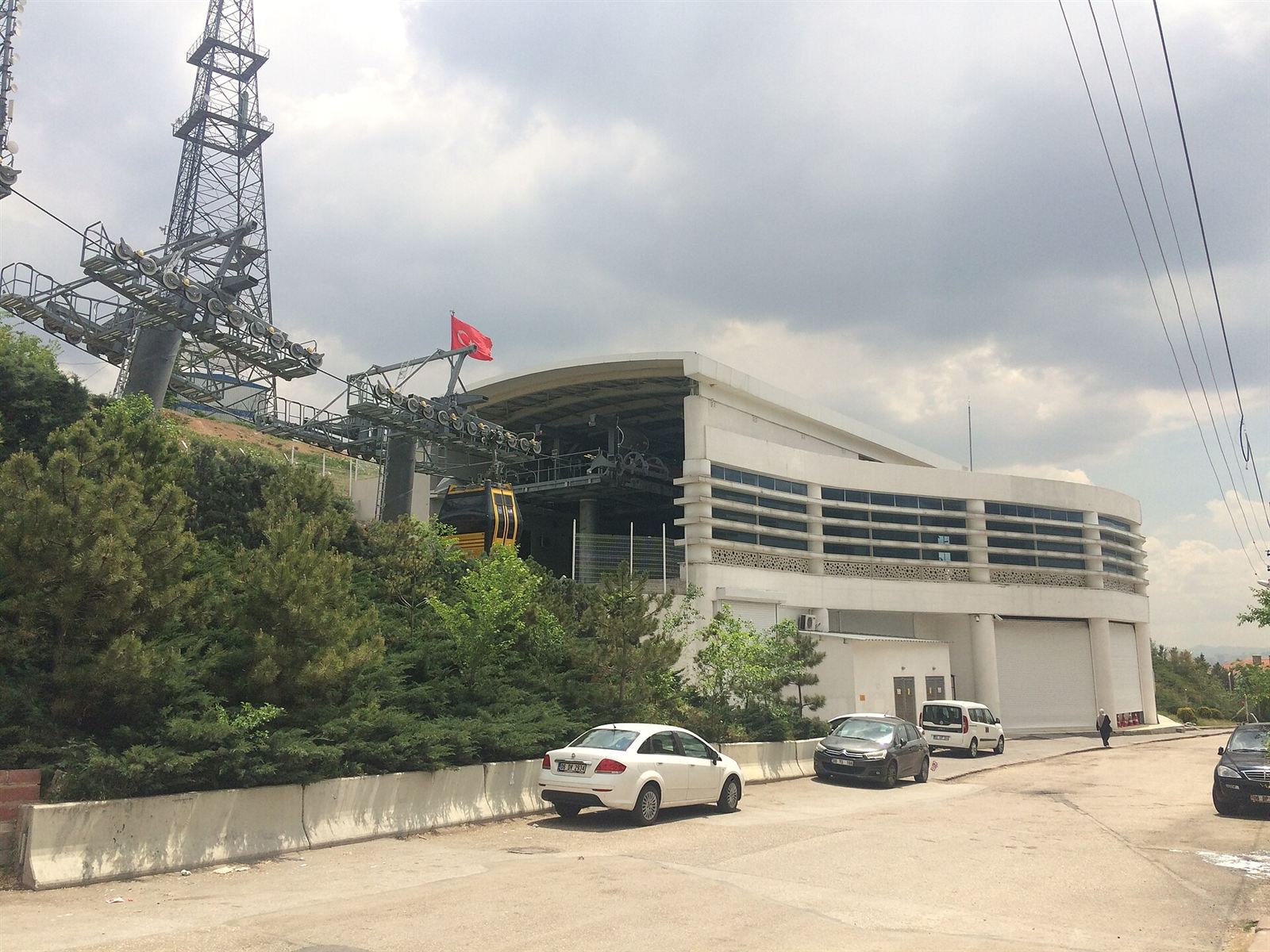
Then the line stopped, not for technical reasons but legal ones: when the case brought against its zoning plan was concluded in court, the line was closed indefinitely in April 2024, and a few months later the municipal council took a decision to liquidate it. The ending of a working public transport cable car on legal grounds is instructive for urban cable car projects in Türkiye: the ground of planning and land ownership is at least as decisive as the rope calculations. The 1,653-metre recreational line at Keçiören, dating from 2008, was also stopped that same spring, in April 2024, and has not reopened. The result is striking for a capital city: there is not a single urban cable car in operation in Ankara today.
Even so, the capital’s rope has not snapped altogether. On the northern flank of Elmadağ, half an hour from the city, a modest 548-metre surface lift keeps running whenever the snow comes. Elmadağ is less a ski resort than the historic training slope of Ankara skiing: this hillside, where university ski lodges from METU to Hacettepe stand side by side, is invaded by sledges and skis from the capital on snowy weekends.
Kayseri — Erciyes: the mountain of the master plan
Rising alone in the middle of the steppe, Erciyes is the stage for the largest planned ski investment in Türkiye. The master plan tendered in 2005 rebuilt the mountain from scratch within a decade: a single piste network entered through four separate gates (Develi, Tekir, Hisarcık, Hacılar) was brought under one municipal company, and the first phase opened in 2011. Today nineteen mechanical installations run at the resort — two gondolas, twelve chairlifts and surface lifts, five magic carpets — and a total capacity of 26,750 persons per hour, by far the highest in Türkiye. With its forty-one pistes, Erciyes gives a sense of scale beyond the numbers: the 2025-26 season ran for roughly a hundred and fifty days from mid-December to mid-May and, with more than three million visitors, set the resort’s record.
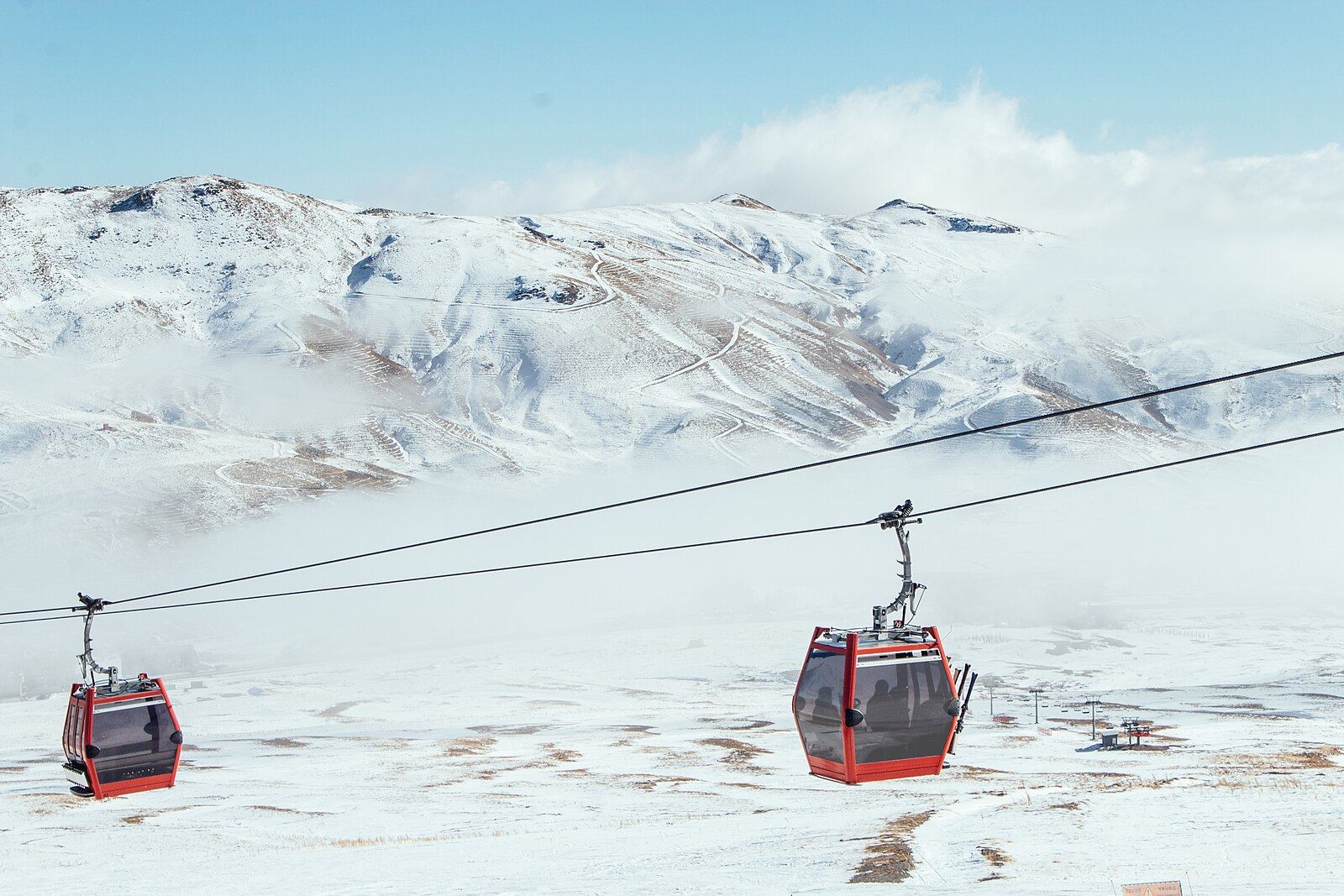
Even the names of the lifts tell the history of the region: the Kültepe and Kaniş chairlifts carry the name of the Assyrian trading colony mound near Kayseri; Hitit salutes the civilisations of Anatolia. The Tekir Gondola serves the family and beginners’ area; the 2,495-metre Lifos Gondola is the main carrier on the Hacılar side. The crown of the resort, though, is the Ottoman Chairlift: its top station at 3,346 metres is one of the highest points reached by lift in Türkiye, and this summit-view station also works as a viewpoint during the summer months. The main lines are as follows:
| Installation | Type | Length | Top elevation |
|---|---|---|---|
| Tekir Gondola | gondola | 1,602 m | 2,466 m |
| Lifos Gondola | gondola | 2,495 m | 2,636 m |
| Divan Chairlift | 6-seat detachable | 2,736 m | 2,931 m |
| Hitit Chairlift | 6-seat detachable | 2,225 m | 2,939 m |
| Kültepe Chairlift | 6-seat detachable | 2,173 m | 2,637 m |
| Ottoman Chairlift | 4-seat detachable | 1,613 m | 3,346 m |
| Keven Chairlift | 4-seat detachable | 1,853 m | 2,607 m |
To these are added the Karakulak, Zümrüt, Sırt, Kaniş, Yalçın and Kartın chairlifts, the surface lift at Hisarcık and the magic carpets distributed across the four gates. Erciyes’s success lies not only in its equipment but in its conception: managing the mountain from a single hand, to a single plan, under a single operator, has not been attempted at this scale at any other resort in Türkiye.
Sivas — Yıldız Dağı: the young resort on the steppe
Yıldız Dağı, fifty-eight kilometres north of Sivas, is one of the youngest ski resorts in Türkiye. Declared a tourism centre in 2010, the mountain saw its foundations laid in 2013 and its official opening at the beginning of 2016; the operator is a company whose capital belongs entirely to the Provincial Special Administration. Two chairlifts and a surface lift serve an eight-kilometre piste network between 1,660 and 2,350 metres; the wind-shielded chairs of the 2,226-metre main chairlift are no small comfort in the steppe frost. The resort positions itself as an affordable family destination; from the summit line, the broad steppe panorama of the Kızılırmak basin opens out. In summer, with water sports and paragliding at Yıldız Lake, the installation tries to spread itself across the whole year, patiently growing its clientele in the middle of the steppe. One warning: Sivas’s Yıldız Dağı and Yıldıztepe at Ilgaz in Çankırı are separate places — we shall be calling in there shortly.
The Black Sea: ropes climbing to the yaylas
On the Black Sea, rope-served installations come in two forms: scenic lines facing the sea in the coastal cities, and chairlifts emerging out of the mist on the highland pastures. Running from west to east, from Bolu to Artvin, this belt is the most varied section of the guide.
Bolu — the hotels of Kartalkaya, the trails of Gerede
Kartalkaya, at the summit of the Köroğlu Mountains, is the prototype of the “hotel-centred skiing” model in Türkiye. Construction began in 1974 with the aim of rivalling Uludağ, its first fruit opened in 1978, and since that day there has never been a public lift at the resort: the pistes and the lifts live together with the hotels, and even the ski pass is sold separately by sector. On the Kartal side, the two-seat chairlifts and T-bars are an inheritance carried from the 1970s to the present day — the first chairlift, dating from 1978, is one of the oldest chairlifts in the country. The Dorukkaya side sets itself apart on the snowboarding front: the wind-shielded four-seat chairlift built in 2011 is the resort’s most modern line, and the claim of “Türkiye’s first snowpark” belongs to this sector.
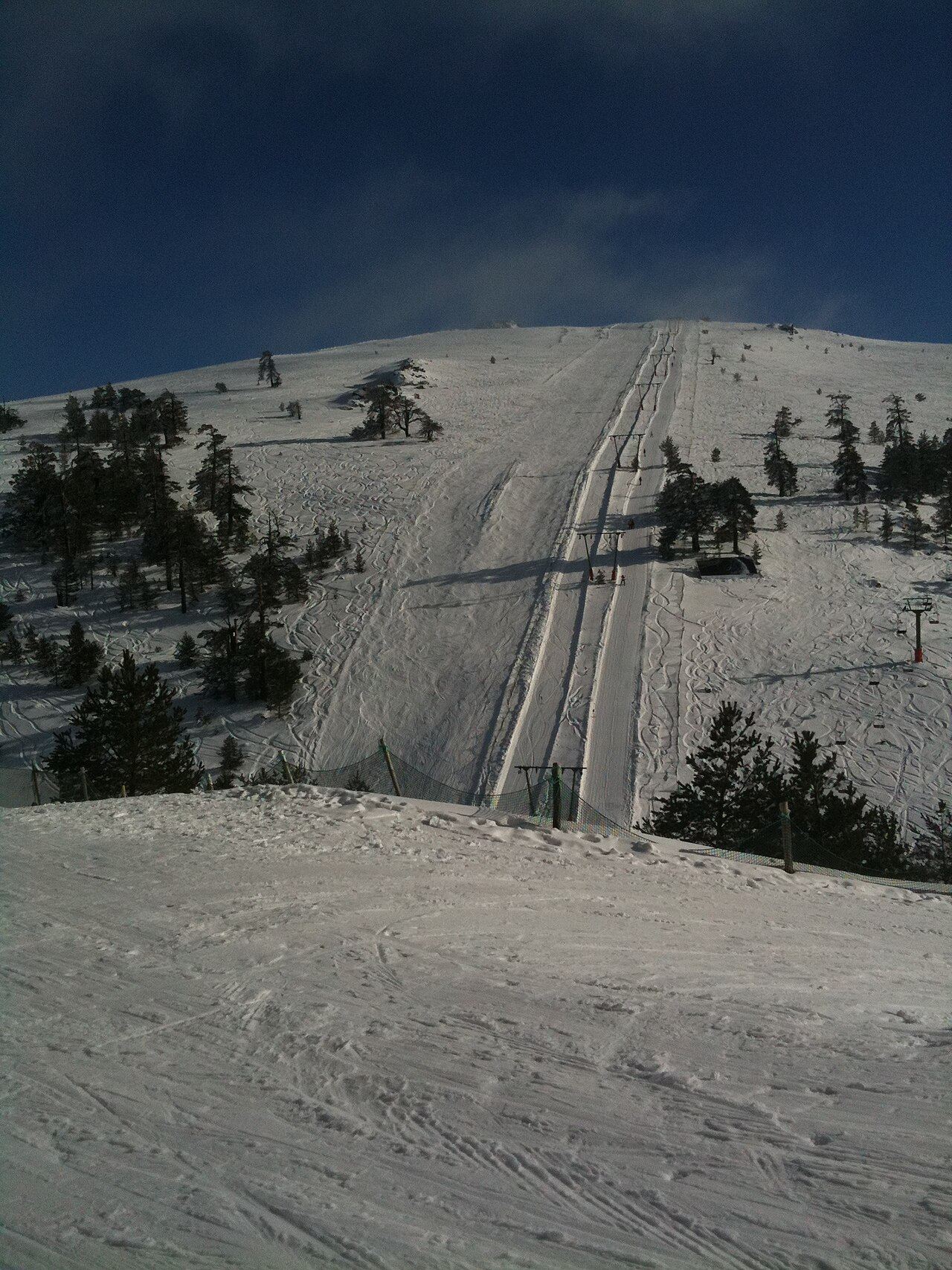
Taken together, the two sectors give a piste network approaching forty kilometres, spread between 1,850 and 2,195 metres; its balanced distance from both Istanbul and Ankara has made the resort the shared weekend address of two metropolises.
At Gerede, north-east of Bolu, there is an installation of a completely different scale: Arkut Dağı (Esentepe) Ski Resort, a few minutes from the D-100 highway, is presented as “the ski area closest to the main road”. Its 350-metre T-bar surface lift is unassuming, but the resort’s real card lies elsewhere: a five-kilometre FIS-approved cross-country course, a regular stop for national team training camps. At one thousand eight hundred metres, this quiet slope, away from the crowds of the alpine disciplines, is one of the few addresses keeping the Nordic tradition alive in Türkiye.
Karabük — Keltepe: where you learn to ski
At the foot of Keltepe, one of the highest summits of the western Black Sea, twenty-three kilometres from Karabük, a young resort is growing. Keltepe, which works with an 873-metre four-seat chairlift built in 2016, a surface lift and a beginners’ lift, makes a modest claim of its own: the local skiing community promotes the resort with the slogan “You learn to ski at Keltepe”. With slopes that hold heavy snow and a reasonable distance from both Istanbul and Ankara, the installation plays to the weekend market and is a typical example of Anatolian skiing developing step by step in the shadow of the big resorts.
Kastamonu and Çankırı — the two sides of Ilgaz
Ilgaz Mountain is shared by two provinces, and its skiing history is split in two as well. Kadınçayırı-Yıldıztepe on the Çankırı side is the mountain’s “old” face: for years, skiing at Ilgaz meant this place. With a chairlift and a 900-metre surface lift, the resort’s chief source of pride is its FIS-registered cross-country course; the 4,500-metre “İstiklal Yolu” trail takes its name from the historic route of the War of Independence that passes through the region. To fight the short season, summer products from ziplining to mountain biking have been added.
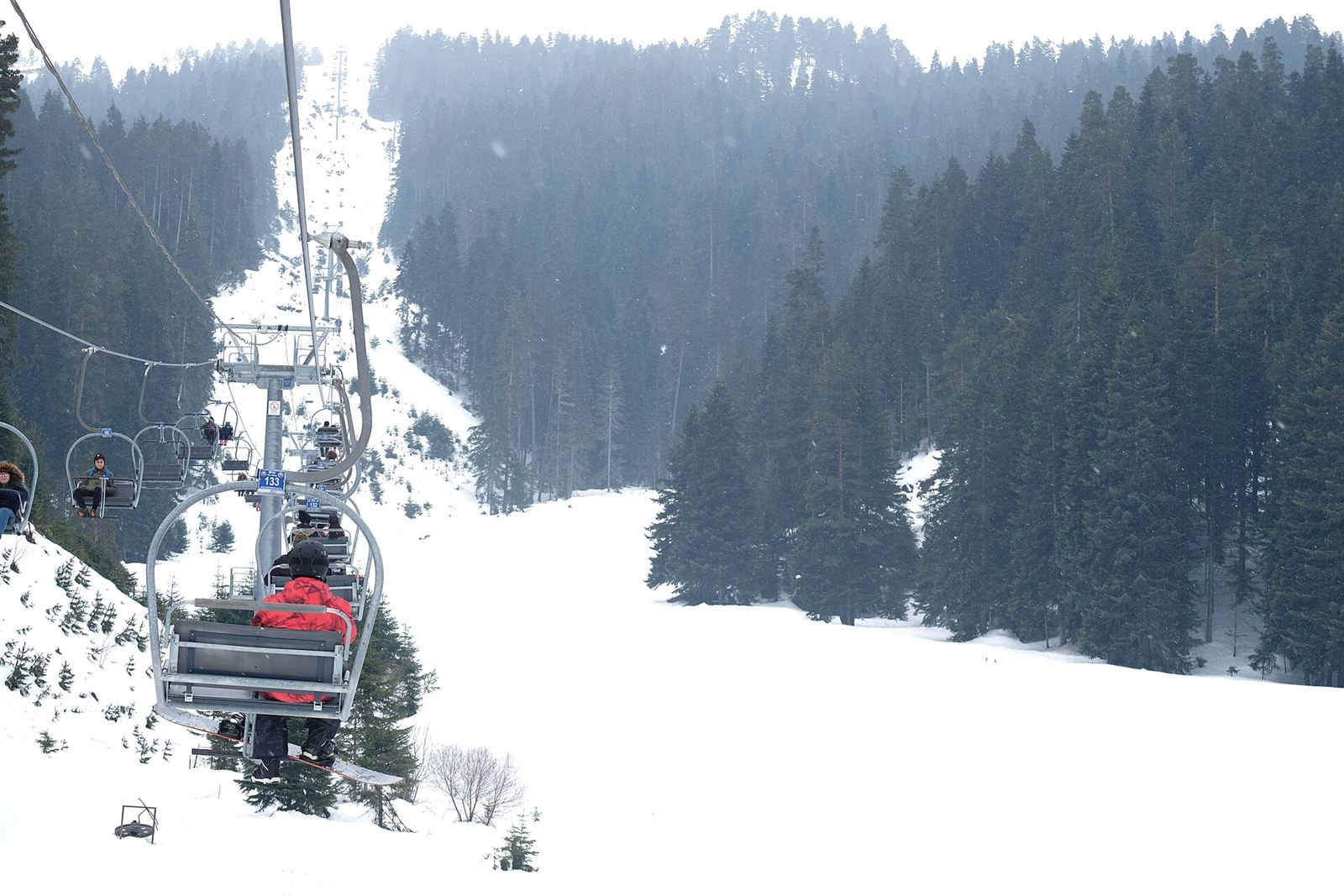
Yurduntepe on the Kastamonu side is the mountain’s new generation. The six-person, semi-enclosed chairlift opened in January 2020 climbs to 2,330 metres over a line of more than three kilometres in two stages; the covers above the chairs are part of a design answer to Ilgaz’s misty, windy weather. The 5,600-metre piste beneath the line, which rises through the pine forest, is promoted as the longest descent in the western Black Sea. In the winter of 2025-26, when entry was free, the resort closed the season with seventy-five thousand visitors over a hundred and seven days; the centre of gravity at Ilgaz is visibly shifting to the Kastamonu side.
Samsun — the hill of Amisos, the grass of Ladik
Coming down to the Black Sea coast, the first stop is Samsun. The 320-metre line climbing from Batıpark on the seafront to Amisos Hill is one of the shortest urban cable cars in Türkiye; six cabins of six people each cross the sixty-two metres of vertical rise in a few minutes. Do not be misled by its brevity: the line is a bridge built from the modern city to the ancient one. Amisos is the ancient name of Samsun, and the Baruthane tumuli on the hill are remains of the city’s Hellenistic past. Opened in the mid-2000s and operated by a municipal company, the installation goes into heavy maintenance every winter and reopens in the spring — quiet proof that even a short line more than twenty years old is not exempt from maintenance discipline.
Samsun’s skiing, meanwhile, is eighty kilometres inland from the coast, on the Akdağ slope at Ladik. The resort’s 1,365-metre chairlift, in service since 2010, carries skiers up to the summit ridge in eighty-seven chairs; six pistes come alive with day-trippers from Amasya, Çorum and Tokat. Akdağ has a pleasant surprise too: the natural grass cover of its slopes allows grass skiing in summer — one of the rare slopes in Türkiye skied in two seasons.
Tokat — Başçiftlik: the district governor’s ski resort
In the inner belt of the Black Sea, on the Canik Mountains, Başçiftlik is the most endearing example of the variety of operators in Türkiye: the resort is run neither by a municipality nor by a ministry, but by the district governorship’s Union for the Provision of Services to Villages. The surface lift, built in 2015 with support from the development agency, serves a piste of one thousand six hundred metres; a hundred-metre magic carpet and a sledging slope have been added alongside it. This modest slope, which the local press calls “Tokat’s Uludağ”, is the province’s only working ski lift and an indispensable snow garden in winter for families from the surrounding provinces.
Ordu — the ritual of Boztepe, the yayla of Çambaşı
When you reach Ordu, it is time to ride one of the best-loved urban cable cars in Türkiye. The cabin, setting off from the seafront at Şarkiye in the middle of the city, rises within a few minutes above the rooftops and the hazelnut-planted slopes; on one side the rows of houses of Ordu, on the other the endless Black Sea. Boztepe had already been, for generations, the place where the people of Ordu went to see their city from above; the cable car opened in 2012 turned that habit into an eight-minute journey. The 860-metre span between two towers on the line of more than 2.3 kilometres is the longest span among the cable cars of Türkiye — along that section the cabin glides with no tower beneath it at all.
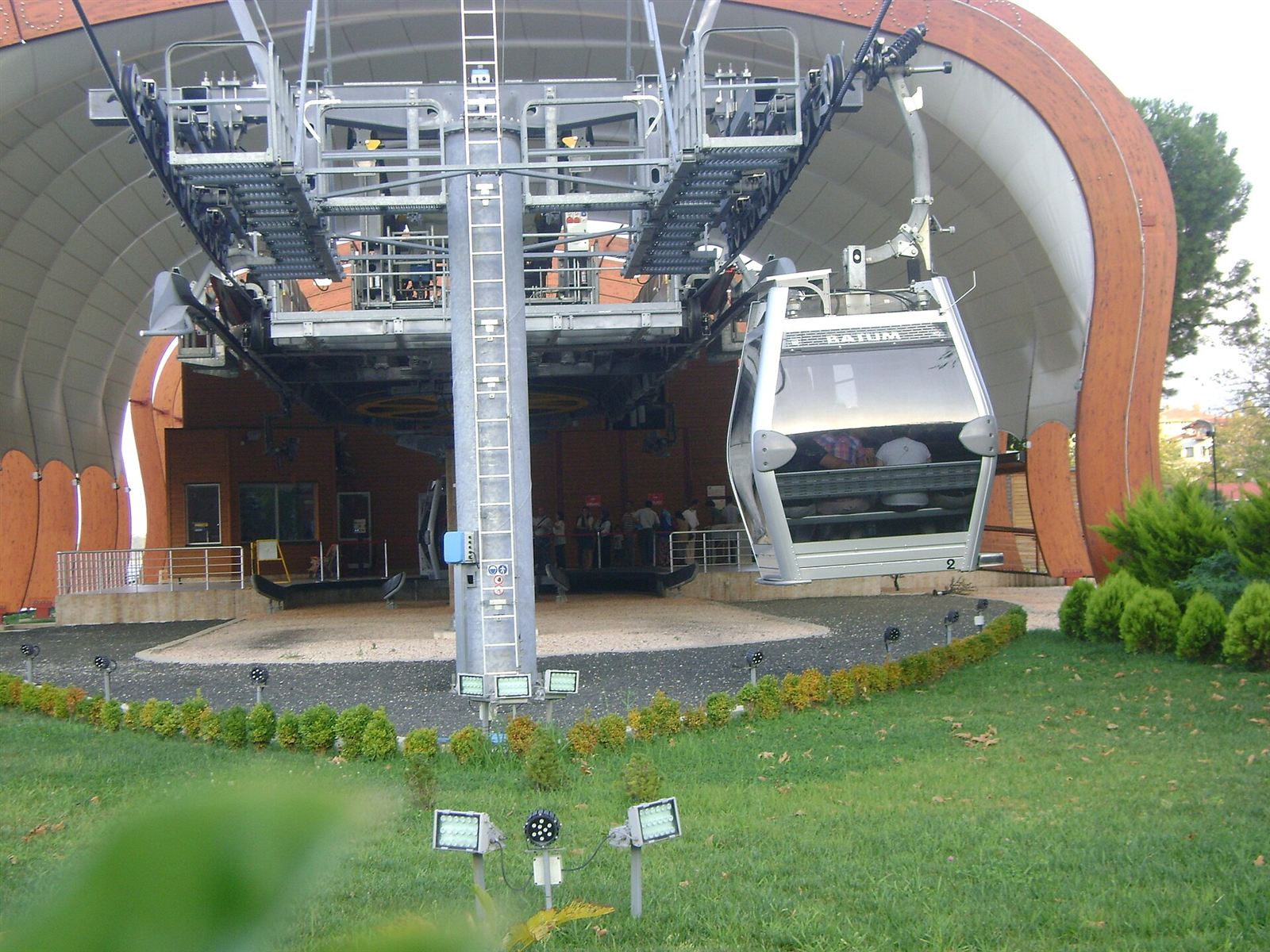
Step into one of the twenty-eight eight-person cabins and, at the top, tea gardens, restaurants and viewing terraces await you. Boztepe is also a paragliding centre, and the line’s best-known ritual was born here: go up by cable car, come down by parachute — at the end of a half-hour flight you glide down to the Şarkiye shore. The line has changed the city’s tourism in measurable ways; in the years since it opened, annual passenger numbers have risen from the hundreds of thousands towards eight hundred thousand, and the tour coaches that used to pass straight through the city have begun to stay overnight in Ordu.
Ordu’s skiing is above Kabadüz, on the slopes above the traditional Çambaşı yayla. Two wind-shielded four-seat chairlifts built in 2016 serve a seventeen-kilometre piste network between 1,753 and 1,998 metres; with a sledging slope and a zipline, the resort works like a snow park, and the hotels and bungalows on the highland pasture are full in summer too. Being able to reach a ski piste in an hour from the Black Sea coast is Çambaşı’s greatest card.
Trabzon — Beşikdağ Teleferik: from the shore to the yayla
At Beşikdüzü, west of Trabzon, the longest cable car on the Black Sea awaits you. Beşikdağ Teleferik, opened in 2018 — also referred to in the press as the “Beşikdüzü cable car”; the two are the same line — sets off from the station on the shore and climbs, over a line of 3.6 kilometres, above the hazelnut groves and then the forest cover to the summit station in Beşikdağ Nature Park. As the cabin rises, the blue of the Black Sea widens behind you; at the top there is a restaurant with a sea view and the park’s walking areas. Passing from a coastal town to the cool of the highland pasture within minutes is a modern summary of the eastern Black Sea’s tradition of “vertical living” — the habit of spending winter on the coast and summer on the yayla.
The story of the line is instructive as well: having carried sixty thousand passengers in its first year, the installation lay idle for four years after its operating contract was terminated; it came back to life in 2023 with a long-term lease and today runs as a professionally operated, well-maintained installation. Let us repeat a warning about names: there is no cable car in operation in the Maçka district of Trabzon; the line people search for as the “Maçka cable car” is in Istanbul. The urban line discussed for Trabzon’s own Boztepe is still at the project stage and falls outside the scope of this guide.
Gümüşhane and Bayburt — two historic passes, two surface lifts
Both of the historic passes linking the Black Sea to the interior have a ski installation. The Zigana Pass is the defile of the caravan road connecting the port of Trabzon to the transit route to Iran; in the area, declared a winter sports centre in 1991, an 850-metre surface lift and a beginners’ lift serve two modest pistes. The installation is small but faithful: as the easiest snow spot for the people of the coast to reach, it fills every winter with day-trippers and people learning to ski; in recent years, snowmobile tours have added non-skiing winter tourism as well.
At the Kop Pass further south, above the Bayburt–Erzurum road, stands Kop Dağı Ski Resort. Sharing the same pass as the memorial to the Defence of Kop in the War of Independence, the installation, with its surface lift and its ski lodge of a hundred and ten beds, serves mainly the day-trippers of the Bayburt and Erzurum area; its rope and haulage system was completely renewed in 2018. It has none of the grandeur of the big resorts, but its function is clear: it is the province’s ski garden.
Artvin — Atabarı: from folk dance to ski resort
The last stop on the Black Sea journey is Artvin. Atabarı Ski Resort, laid out on the Mersivan yayla sixteen kilometres from the city centre, takes its name from Artvin’s emblematic folk dance. Opened in February 2009, the resort works at one thousand seven hundred and fifty metres among spruce and pine forest, with a 595-metre chairlift and a short surface lift; alongside pistes at three levels of difficulty, traditional sledge races are also on the resort’s calendar of festivities. One of the chairlifts closest to the sea in the eastern Black Sea, Atabarı is the installation that put Artvin on the skiing map.
Eastern Anatolia: the country of high altitudes
Eastern Anatolia is the centre of gravity of skiing in Türkiye: the highest elevations, the driest snow and the longest seasons are here. But the region’s ropes are not strung only at the big resorts; in almost every province, a lift built on a slope at the edge of the city mingles with the sound of children in winter.
Erzurum — Palandöken and Konaklı: the capital of skiing
In Erzurum the gondola sets off almost from inside the city: at seven kilometres from the centre, Palandöken is a “city mountain” with few equals in the world. On top of the two gondola lines built in 1998, modern chairlifts were added in the wave of investment before the 2011 Winter Universiade; today the resort works with a piste network running from 2,200 metres to 3,176 metres, and lift capacity of more than 22 thousand persons per hour. The longest descents — Ejder and Kapıkaya — reach twelve kilometres and shed one thousand one hundred metres of vertical; night skiing on floodlit pistes is Palandöken’s signature. The hotels are on the piste edge: stepping out of the door and skiing to the lift is not a marketing slogan here but a daily routine.
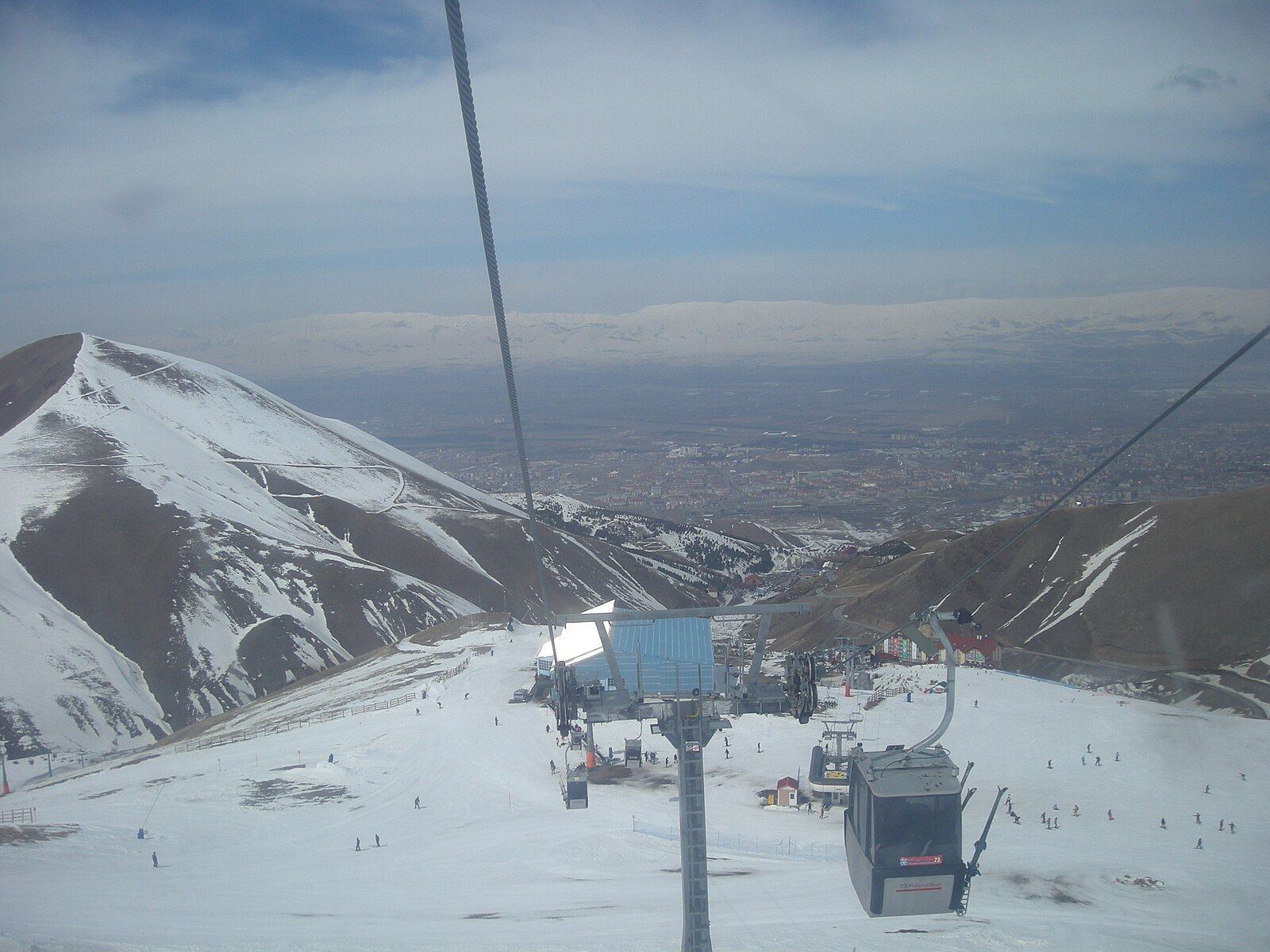
The principal lines also show the resort’s layers:
| Installation | Type | Year |
|---|---|---|
| Gondolas 1 and 2 | 4-person gondola | 1998 |
| Lifts A, B and C | 4-seat detachable | 2009 |
| Ejder and Vadi chairlifts | 4-seat fixed grip | 2019 |
| Installations 4 and 5 | fixed-grip chairlift | 2013–2014 |
| Polat 1-2-3 | 2-seat fixed grip | 2001 |
Konaklı, in the neighbouring valley, was the Universiade’s second arena: the alpine discipline races were held here in 2011. Climbing from 2,327 to 2,900 metres with three modern four-seat chairlifts, the area is today under the same operating umbrella as Palandöken, and there are plans to link the two areas to each other in future. Erzurum’s claim to skiing is bound up with the city itself: season openings are held in a festive atmosphere with torchlit ski displays.
Erzincan — Ergan: three thousand metres, twelve kilometres from town
Ergan Mountain, at the end of the Munzur chain, is only twelve kilometres from the centre of Erzincan — and that closeness produces one of the sharpest contrasts in Türkiye: as the eight-person gondola cabins rise from the plain towards the ski area around Ardıçlı Lake, the Erzincan plain opens out like a map. The resort entered service in 2013 with an international ski mountaineering championship; two long, wind-shielded chairlifts and surface lifts have been added above the gondola. The piste network climbs from about one thousand seven hundred and fifty metres to the three-thousand-metre mark; with night skiing floodlights and snowmaking, Ergan is the best-equipped mid-sized resort in the east. It is known for its prices too: it is frequently in the news as one of the most affordable large ski resorts in Türkiye.
Tunceli — Ovacık: on the edge of the Munzur
Ovacık, a quiet mountain town on the edge of Munzur Valley National Park, is Tunceli’s skiing address. The resort, at the Öveçler village site, works with a single surface lift; with its one-thousand-two-hundred-metre main piste and a nursery slope, it hosts day-trippers from a wide area, from Elazığ to Erzincan. The support of the Gendarmerie Search and Rescue teams for safety and ski instruction on the piste is an arrangement rarely seen at small resorts. Skiing against the backdrop of the snowy summits of the Munzur is a simple winter experience, far from the crowds of the big resorts.
Elazığ — Hazarbaba: pistes with a view of two lakes
On the flank of Hazarbaba Mountain, south of Sivrice, lies one of the most scenic small ski areas in Türkiye: from the pistes you can see both Lake Hazar and the Keban Dam reservoir. The single mechanical line of the resort, opened at the end of the 1990s, runs to more than a kilometre; its last decade, though, is a summary of the region’s recent history — between the pandemic closure, the 2020 Sivrice earthquake and snow drought, the installation ran intermittently for years. Reopened in January 2025 with a torchlit ski display, the resort is greeted in the local press with the language of “rebirth” at each of its returns; for those who want to ski facing a lake view, it remains one of the hidden corners of the east.
Bingöl — Hesarek and Yolçatı: two generations, one mountain chain
Bingöl’s skiing memory is spread across two installations. The older is Yolçatı, twenty-five kilometres from the city centre: with its surface lift and ski lodge built in the 1970s, this is the slope that started ski culture in Bingöl. Although the province’s skiing has largely moved to the new resort today, Yolçatı, with half a century behind it, deserves to be called the region’s forebear.
The newer is Hesarek, at the Dikme village site: a public installation running with a chairlift, a surface lift and a beginners’ lift, with a guest house, opening its seasons with ceremonies attended by the governor. Hesarek’s year 2025 also entered Türkiye’s operational safety agenda: when the nationwide inspections at the start of the year found the operating licence to be incomplete, the mechanical installations were stopped for months; with staff training, test reports and emergency action plans completed, preparations for reopening were reached by the end of the year. It is a current example of a ski resort standing not only on snow but on paperwork — for those curious about the regulatory side of the subject, our article on cable car safety and EN standards goes into the detail.
Muş — Güzeltepe: a slope facing the plain
Güzeltepe, on the edge of the Muş plain, just outside the city, is the town’s weekend escape. The surface lift, under the Provincial Directorate of Youth and Sports, runs when the snow arrives; on the piste there are as many sledgers and snowball fighters as there are skiers. The snow droughts of recent years have been this slope’s fate too; when the season opened in the winter of 2026 on the earliest date in years, that was news in its own right locally. A small but well-placed installation: the children of Muş meet skiing here for the first time.
Bitlis — the slopes of the snow city
Bitlis is one of the snowiest cities in Türkiye, and here skiing begins right at the edge of town. The surface lift on the Dideban hill east of the city is within walking distance. On the Rahva flat between Bitlis and Tatvan, the ski area named after the historic El-Aman Han caravanserai offers not a steep slope but skiing on a broad, windy plateau — which is why it has hosted training sessions of the national cross-country team; during school holidays it fills with the sledging crowds of families from Bitlis and Tatvan. The province also has small slopes such as Çirtkaya, Sapgör and Ahlat Serinbayır; Bitlis is one of the rare provinces holding half a dozen ski spots on its own.
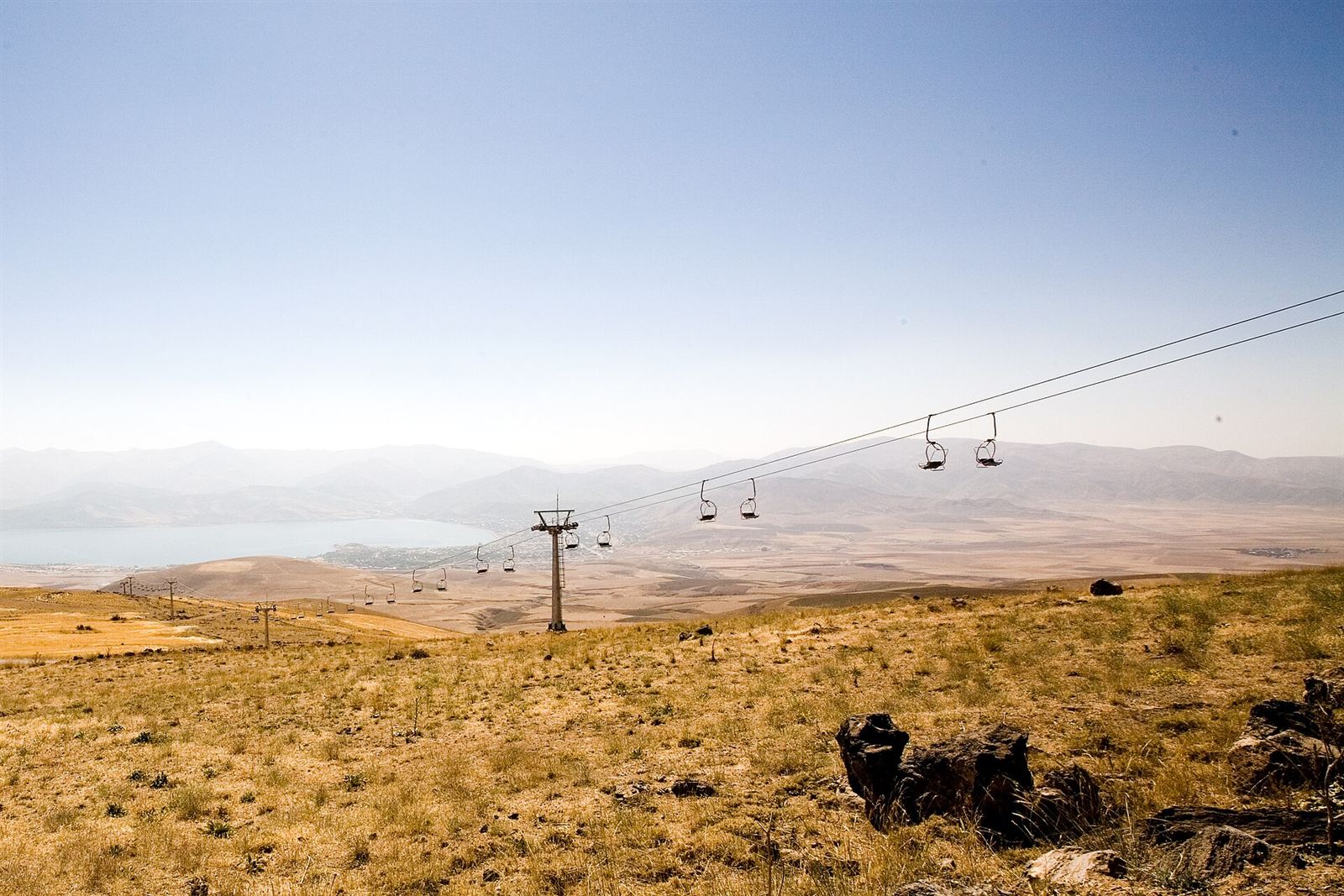
The most striking installation in the region, though, is on the Nemrut caldera above Tatvan. In 2006 a line of two and a half kilometres was built on the outer flank of this volcano — which holds one of the world’s few great crater lakes — facing Tatvan; the signature line in the marketing was “skiing against the blue of Lake Van”, and indeed both the crater rim and the lake are visible from the lift. After bright years that reached as far as Europe’s distinguished destination awards, the installation lay idle for a long period after 2019; its revival remains a permanent item on the Bitlis agenda. Let us clear up another confusion: the Nemrut here is the volcano with the crater lake; it has nothing to do with Mount Nemrut in Adıyaman, famous for its statues.
Van — Abalı: skiing opposite the lake
On the southern shore of Lake Van, at the Abalı village site in Gevaş, there is a small resort built on the foothills of Artos Mountain. From the pistes of Abalı, which works with two lifts built in 2010-2011, the “Sea of Van” is visible — the local press never mentions the resort without that epithet. The resort’s story is the typical story of the small publicly run installations of the east: openings that wait for snow, short seasons, and an operating order re-established every winter. But when the snow does come, there are few pistes in Türkiye to match skiing against that lake view.
Hakkari — Merga Bütan: the most south-easterly piste
Türkiye’s most south-easterly ski resort is on the Merga Bütan yayla, twelve kilometres from the centre of Hakkari — the name is also written “Merga Büte”. With its installations laid out at around 2,800 metres, the resort is one of the highest-altitude ski areas in Türkiye; it works with a chairlift, a surface lift and an enclosed magic carpet, and night skiing floodlights have been added as well. Carrying the image of a “city where people ski” in a province long associated with the security agenda, Merga Bütan is described by the local press as “the lung of Hakkari”; during the mid-term holidays, families from the surrounding provinces move up to the highland pasture looking out over the mountains of the Zap river. The season runs from December to mid-April.
Ağrı — Bubi Dağı and Güneykaya: slopes in waiting
In the province that lies in the shadow of Mount Ararat, two places come to mind when skiing is mentioned; the story of both is about waiting. Bubi Dağı, eighteen kilometres from the city centre, is the province’s traditional ski slope; the revival of the area, known for one chairlift and two surface lifts, is a constant presence on the local agenda. Güneykaya at Eleşkirt is a more bittersweet example: opened in 1998 on an ambitious scale for its day — with a chairlift, a hotel, a restaurant and sports halls — the installation could not be operated and has stood idle for a quarter of a century; the revival promises renewed every few years make it the textbook example of the east’s early and unfinished ski investments.
Kars — Sarıkamış: crystal snow among the pines
Cıbıltepe, in the Sarıkamış district of Kars, has the legendary snow of Turkish skiing: dry, powdery, referred to as “crystal” and compared to Alpine snow. The pistes descend through Scots pine forest; gliding above the forest cover on the chairlift is the resort’s signature. Having built its first chairlift in the mid-1990s, the resort added new lines in 2009 and 2014; with the six-person wind-shielded chairlift built in 2019 coming into service, the main carrying capacity increased markedly, and the snowmaking system of eighty-five machines installed in 2025 became insurance against dry winters. The operator is a company of the Kars Governorship.
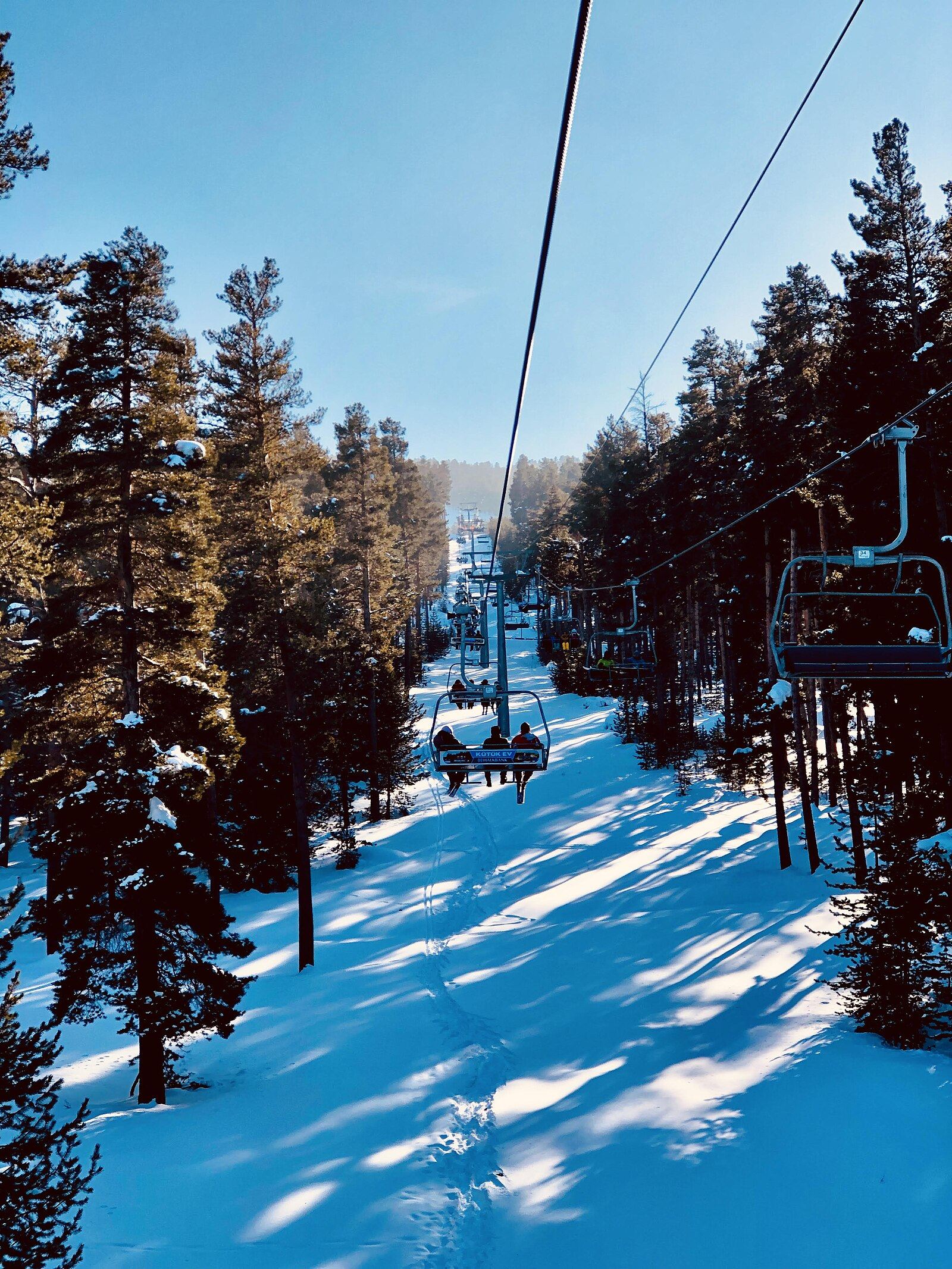
The name Sarıkamış is remembered in Türkiye alongside the sorrow of December 1914; the commemorative walks held in the region each winter recall with respect the history these forests carry. The resort carries ski tourism alongside that grave identity, in the same landscape. One detail: the name of the ski area is Cıbıltepe; it should not be confused with the small Bayraktepe slope in the district centre.
Ardahan — Yalnızçam: the resort built with European funding
The last stop of the eastern journey is the Uğurludağ slope, twenty kilometres west of Ardahan. The four-seat chairlift of Yalnızçam Ski Resort, built in 2017, climbs from 1,966 metres to 2,497 metres over a line of about three kilometres on a slope covered with Scots pine; the wind covers on the chairs are as much a practical comfort in the harsh frost of the east as a detail the operator recounts with pride. The story of the resort’s opening is distinctive too: the project entered service with a ceremony at the beginning of 2018 as one of the rare examples of a ski installation in Türkiye built with European Union grant funding. Ardahan’s obscurity and its crystal snow make the resort a quiet discovery, described in travel writing as “the shining star of the east”.
South-eastern Anatolia: Gaziantep’s park cable car
The only cable car in the south-east is strung not over a mountain but over a park — and that is precisely why it is worth telling. At Şahinbey in Gaziantep, above Şahinbey Park, laid out in the broad valley between four neighbourhoods, stands a gondola line opened in the summer of 2011 under the slogan “the region’s first cable car”. With twenty cabins of eight people each and a route of about nine hundred and fifty metres one way, the line was built not to get from one place to another but as the “viewing roof” of a vast city park. Beneath it stretch an alpine coaster, an amphitheatre and a miniature exhibition of models of Türkiye’s landmark buildings, from Hagia Sophia to Anıtkabir. This rare example of a cable car serving as park furniture in Türkiye shows that a cable car does not necessarily need a mountain or a sea — sometimes even a neighbourhood park can find a rope to glide above it.
As the road ends
Looking at the sum of this journey, which began at a cloudy Mediterranean summit and ends among the Scots pines of Ardahan, a few things become clear. The rope-served installations of Türkiye are not of one type: some are a city’s daily transport, some the staircase to an ancient city, some the gateway to a highland pasture, and some no more than a modest surface lift that wakes only when the snow falls. The operators show variety too — municipalities, governorship companies, provincial special administrations, a chamber of commerce, even a district governorship’s village services union. And the fate of the lines is written not only in steel; it is written in zoning plans, licence files, maintenance discipline and operating skill: Ankara’s stopped lines, Denizli’s rope replacement, Hesarek’s licensing pause and Bozdağ’s return through avalanche engineering are different pages of the same lesson.
This guide rests on the ongoing installation compilation of the Egenil Teleferik Archive, and like that compilation it is a living text. In Türkiye installations open, close and change hands; the records change along with them. If you spot something missing, know of a correction, or there is a lift in your part of the country that we have not yet heard of, write to us — the guide will grow with its readers’ contributions. For the meanings of the terms, our cable car glossary and, for the past of these installations, the history of cable cars in Türkiye are always to hand.